


Hello,
Out of all the tech stuff that is happening. I think we need to do some work on making people care. Care to deliver great service. Care to thank someone who gave great service. It’s something machines can’t honestly do (even though some people at Anthropic are wondering if AIs have feelings).
PS: If you haven’t filled out my survey, I’d love to have your reader feedback.
Best, Martin

Generate 50-200+ enriched MQLs
every month.
Download the brochure ➛
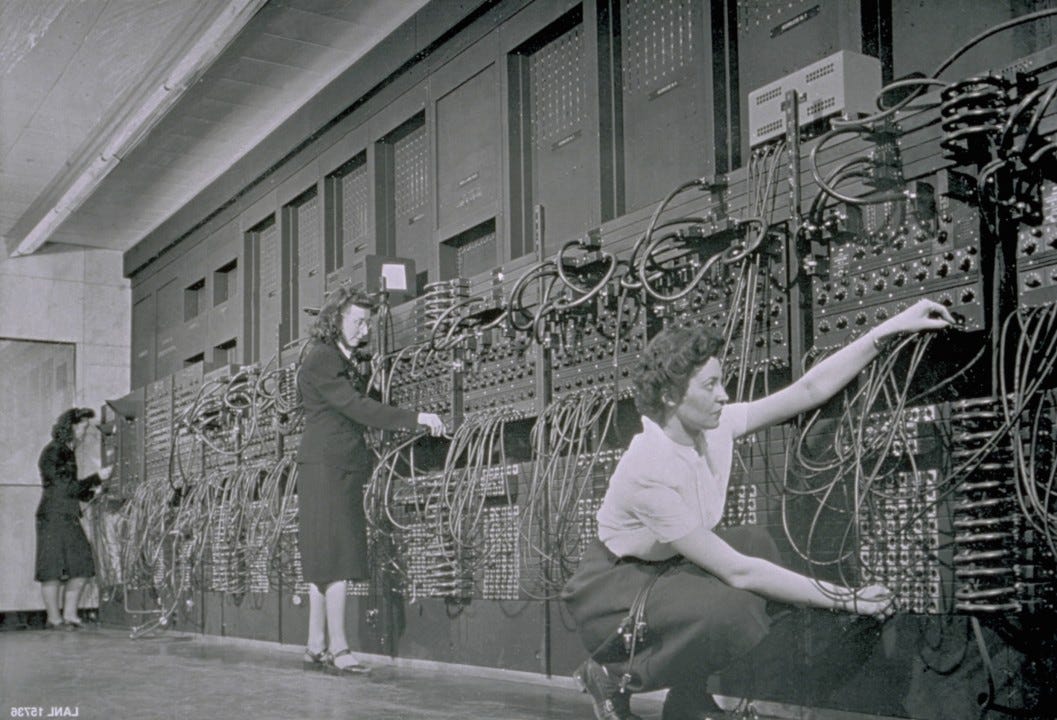
Humans are already servants of computers
We spend a lot of time worrying that AI is going to take people’s jobs. But the truth is technology has already taken the human soul out of many jobs a long time ago. The person is still employed, but increasingly they are there to serve the computer rather than the customer.
I was reminded of this recently at my bank. I had what should have been a relatively simple problem involving account access and user rights. My business manager AND the bank director spent most of an afternoon with me trying to solve it. Neither could figure it out. After hours of work and supposedly finding a solution. I find out the next day that they have mostly locked me out of my own account.
This isn’t a technology problem. It is a problem that the people who should know their jobs dont. It is incompetence created because everyone has moved all the decision making to computers. Humans are merely there to click and type.
I think we have the same problem in hotels.
A few weeks ago I posted about hotel ontology and Tom Goodwin made a simple observation: before worrying about sophisticated AI, many hotels still struggle with basic operational competence. I think he has a point.
Understand the guest when they arrive. Recognize the regulars. Know what they booked. Getting a guest request arranged (not, I will relay the message). Know the hotel. Recommend a restaurant because you have an opinion. Remember things. Take responsibility, actually care about the results of the job, not just the financial reward.
None of this is particularly advanced hospitality. It’s kind of the basics of the job. Yet it is quite rare today.
Over the years we have designed jobs around systems and processes. Select the dropdown. Escalate the exception. Don’t make a decision because the system doesn’t allow it. We say we are protecting jobs, but what exactly we are protecting? Human robots?
Ironically, this is where I think AI could actually help. It may be replacing all the stupid technological work we have forced people to do. Searching through systems, entering information three times, remembering codes, finding policies and navigating processes. If AI can take that away, perhaps we can give people something much more important back: responsibility.
But that requires us to invest in humans again: Teach people good manners. How to maintain a conversation. Reading the customer. When to have an opinion (and, when not to have one). How to decide, and how to own the consequences. Expecting people to solve problems rather than operate software. Being responsible and proud of their jobs. The list was a lot longer but I had to cut some out for brevity.
Unfortunately, it is quite probable that many people will turn over all their opinions and thoughts to AI. But in hotels and business we should be up-skilling people on the responsibilities of being a human.
When I arrived in the hotel industry I was amazed by how easy it is to make people happier, that’s what makes this industry so amazing. Not so many industries have that ability. We should use it more.

About me: I'm a fractional CMO for large travel technology companies, and the co-founder of Pragmatik, an agency that drives MQLs through highly relevant content and distribution. You can find out more at wearepragmatik.com. Flexible Cancellation Bookings
Aven Hospitality is adding Hopper’s Cancel for Any Reason product to its booking engine, giving participating hotels another way to offer flexibility on direct bookings. Guests can receive up to a full refund. This will grow "direct bookings” on paper. But we’ve seen how it also impacts behavior changes. At least cancellations have some revenue here.
BOOKING FLEXIBILITY
A Cocktail Menu That Helps
If you know me, you know I like a great visualization. Here’s an excellent cocktail menu that is instantly understandable. There are many menus that could get such a treatment and which might help guests try something new.
GRAPHIC MENU DESIGN
Hotels use AI, but Guests use it more
h2c’s AI Opportunity Study finds hotel adoption rising from 78% to 91% in a year, while only 13% of respondents report measurable returns. At the same time, consumer AI tools are taking on more of the planning and purchasing process. There is clearly more adoption at guest level. Which will impact expectations and hotels need to factor that in their tech reviews.
CONSUMER AI
AI, AWS and Hilton
At the Destination AI Summit, leaders from Amazon Web Services and Hilton discussed how AI is changing travel discovery and booking. Hilton’s work on bringing property information into AI tools is going to be critical for ranking. The questions is what data, does it help, does it influence?
HOTEL DISTRIBUTION
Liquid Death Confusion
How much should a brand extend? Liquid Death’s original appeal was simple and focused. But it needs growth. So Mango Facemasks, why not. The question isn’t if growth is needed, but rather how far do you extend the brand? Do you just add more products? Do you create X games? Make a Michelin Guide?
BRAND LONGEVITY

AI That Uses the Computer
Incredible is an AI agent designed to carry out tasks directly on a computer rather than requiring every system to expose a perfect API. It could be great for hospitality, where decades of fragmented software has lots of copy pasting going on. It is an interesting demo. Is it just another agent?
COMPUTER USING AI
Google’s UCP
Google’s Universal Commerce Protocol for Lodging is being developed with companies including Booking.com, Expedia, Hilton, Marriott, Amadeus and Trip.com to give AI systems a common way to interact with hotel inventory and booking rules. This is important, but this is also where hotel websites are totally missing and better come in fast before the OTAs eat all the cake.
AI BOOKING PROTOCOL
Building human audiences in an AI World
As AI becomes better at choosing what people watch, read or buy, distributors will likely lose some of their power. Doug Shapiro argues that building genuine audience demand and communities becomes even more important in that environment. I think it is often a good idea to optimize for people.
AI BRAND DEMAND
Would Booking.ai start with search?
Since Booking.com is a brand from the internet era, I’m taking the liberty to imagine a Booking.ai for the internet era. A16z’s recent consumer AI ranking raises a good question for travel: if a marketplace were designed today, would it still begin with a blank search box and hundreds of results? Or does it just begin with a huge context ramble?
AI TRAVEL SEARCH
Design, Art, AI and Tech
All the parts of hotel marketing are shifting with AI. Discovery, creative generation, conversions. But building a strong brand, art, design, emotions are not. Arguably the places where we need to become better than ever.
SOCIETIES MAGAZINE
Changes everything again
Discovery is changing, AI might not yet be the main source of traffic today but there’s no doubt discovery will totally shift. In the world of living things: if it is easier it will win. But AI search will likely change towards hundreds of micro-search terms. Instead of Boutique hotel in Soho, it will be much more granular. But how does one appear as much as possible while maintaining some form of brand coherence. In other words, branding against a search term will not suffice anymore.
ALWAYS CHANGING
• Inside the Working Life of a Michelin Inspector - Link
• Where to get inspiration for hospitality - Link⁺
• Lacoste creating in the Third space - Link
• The Hotel Yearbook Goes All-In on AI - Link
• Ridiculous, fun, chaotic, beautiful - Link
Did you know: The word "competent" comes from the Latin word "competens," which means "suitable" or "qualified." It entered English in the late Middle Ages and has kept the meaning of being able or fit to do something. Defined using Lomar Dictionary⁺