


Hello,
The travel AI story of the week is that OpenAI bought Odessia, do they have ambitions in the travel space? Is the AI Trip Planner space already aggregating? So many thoughts. But it’s early, very early.
PS: If you haven’t filled out my survey, I’d love to have your reader feedback.
Best, Martin

Generate 50-200+ enriched MQLs
every month.
Download the brochure ➛

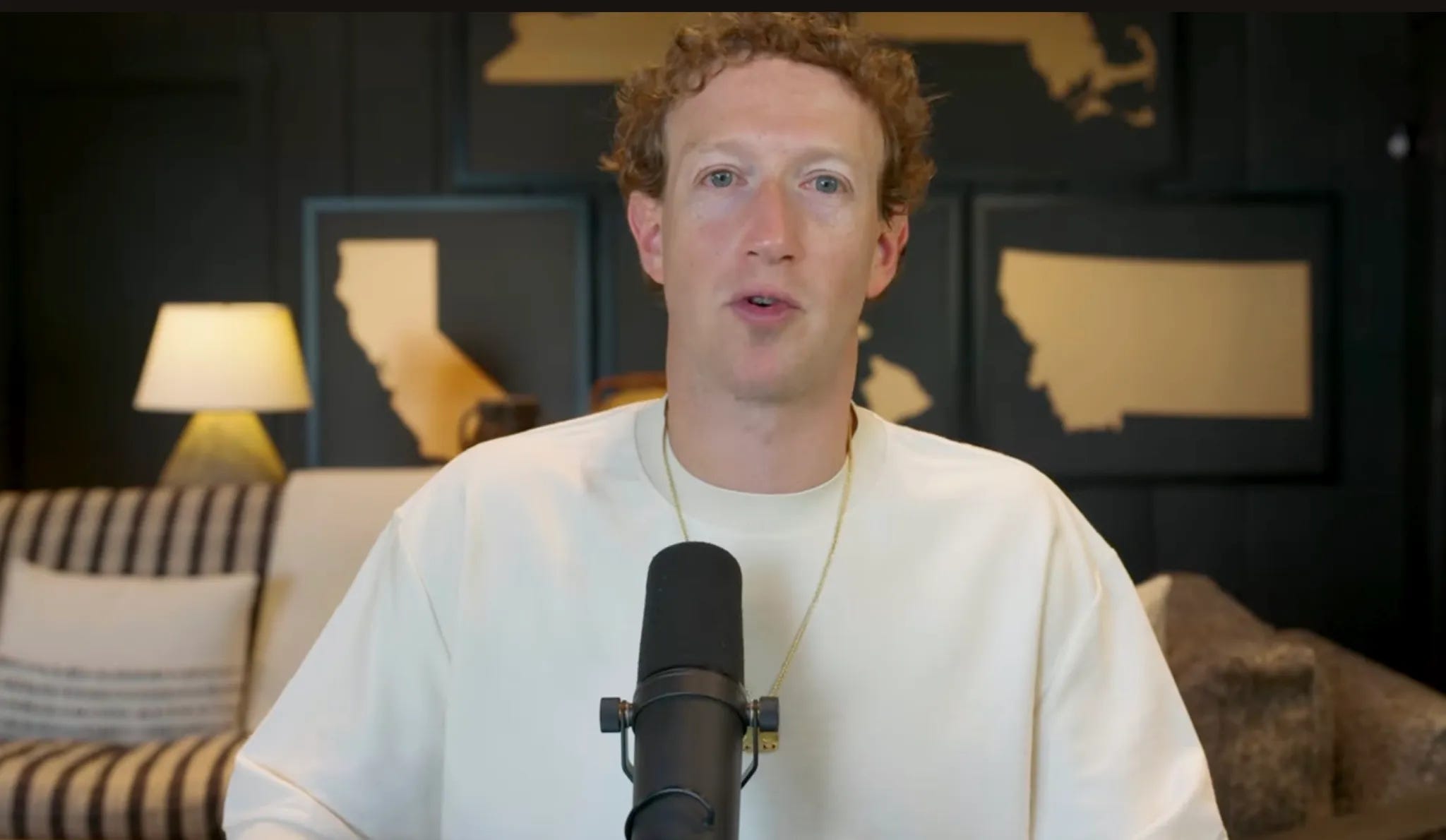
Meta Might be Making Ad History
I once wrote that Google Ads was the biggest shift in advertising because it introduced intent at scale. For the first time, advertisers could reach people at the moment they were actively searching for their product type. That changed everything.
Before that, a lot of advertising was educated guessing. TV, newspapers, radio, billboards. You bought attention and hoped it belonged to the right person. Google made advertising feel almost logical. Someone searched for “hotel in Paris near eiffel tower” or “booking engine software” and you could appear in that exact moment. It was not perfect, but it was a revolution.
At the same time, Google also created a “hidden” internet tax. Once competitors could advertise against your brand searches, companies had to pay to defend demand they had already created. If someone searched for your hotel name, your product, or your company, you still had to buy the click because someone else (an OTA?) could sit above you. That is not really marketing. It is more like paying for protection. Google is the main winner here, but I digress.
Google’s limitation was always that intent captures demand that already exists. It does not create much new demand. It does not make someone dream about a hotel or product they had never considered. It does not build memory, emotion, or brand in the old advertising sense. It waits until the customer has already started moving.
When I wrote that article, Facebook was not a serious advertising force. Since then, they become one. And not in a theoretical way. In 2025, Google advertising revenue is estimated around $294.7 billion, while Meta advertising revenue is around $196.2 billion. Meta is still smaller, but its growth is roughly double Google’s.
Meta built one of the largest discovery engines in the world. But for a long time, the ads were pretty low quality. Strange miracle products and spammy offers. But with AI and machine learning they’ve learned how to approximate intent without waiting for someone to type a search query. Not declared intent like Google, but if it works, do we really care?
For hotels, Google is still critical. High-intent search will always matter. And most hotels need to pay for protection… If someone is searching for your property or destination, you need to be there or an OTA will be. But Meta can do something search is not built to do. It can show the rooftop, the breakfast, the room, the neighborhood, the feeling. It can make someone want the trip before they search for it.
Hotels have handed over most of the discovery to OTAs and distributors. But could they reinvest that into a mix of Meta+Search to keep more direct?
Google taught us the value of intent. Meta may be reminding us that one’s brand building advertising doesn’t have to be a coin flip.
About me: I'm a fractional CMO for large travel technology companies, and the co-founder of Pragmatik, an agency that drives MQLs through highly relevant content and distribution. You can find out more at wearepragmatik.com. OpenAI Buys a Travel Agent
OpenAI has bought Odessia, the AI travel agent launched about five months ago after Sonder shut down. It shut down the product. But it seems it wants to go deeper in travel. It’s interesting, I wonder how much they’re going to dabble with travel before they realize this really is a very specific industry. And so many parts of it are so different. Or are they just trying to follow Meta’s success with Muse?
AI TRAVEL AGENT
Tripadvisor “Writes Down” Metasearch
Tripadvisor wrote off $369.5 million of goodwill in its hotels business because traffic is harder to buy: “due to the changes in the search landscape”. Their metasearch ads was a good idea, but late. Their direct links were not bad, but at $20K per hotel a little ricidulous. They have reviews which AI needs, but probably not enough. I find that they stumbled upon a goldmine, managed to IPO, then never figured out what to do next.
TRIPADVISOR FILING
Accor’s Loyalty Program works
Hard Rock’s hotels are joining Accor’s loyalty programme, no ownership change, Accor just takes fees. It’s a bit like an OTA? Apparently, Hard Rock put its New York hotel on Accor’s site first, and by July it was getting more than 1,500 room nights a month from it, more than from their own site. TBH, the numbers seem too good to be true. But the business model is interesting.
HARD ROCK AND ACCOR
“Is This a Hilton?”
Hilton has a problem, apparently many travellers didn’t know they could earn Hilton points in some of their brands. I’m surprised - Loyalty memberships is the main thing hotel brands sell. And Hilton doesn’t have that many brands - 28 they say, but some are still being created. Marriott and Accor seem to have figured this out a bit better. Btw the new hotel brands of the world chart is coming for Black Friday.
HILTON BRANDS
Selling time
Hilton now sells a confirmed late check-out for $40 to $60 depending on the brand. Peninsula gives the room from 6am on arrival to 10pm on departure for free, but only if you book direct or through its preferred advisors, and the Hoxton does something similar with Flexy Time. Peninsula’s “time as luxury” idea is really nice. As a direct-booking argument it’s great for luxury. Because time is luxury, but only for those who already have money.
LATE CHECK-OUT
Please Check Yourself In
Robin Deb paid 365 euros for a night in a four-star-plus hotel in the Netherlands and did everything himself: check-in, app, QR menu, ordering, paying, housekeeping requests, check-out. Our industry (and many others) hasn’t quite figured out how to deal with self-service. Self-managing house-keeping is utterly frustrating. There’s a middle ground somewhere.
SELF CHECK-IN + FAILURE OF SELF-SERVICE
Lots of Talk, Little Traffic
Mauricio Prieto did a word analysis of the major OTAs. On Booking’s call, analysts spent 62% of their question words on AI. Booking puts LLM referrals under 1% of room nights. The comment from Booking’s CFO saying agents would rather plug into an aggregator than into millions of hotels. That’s the argument every hotel should be preparing an answer to. That’s exactly how hotels lost the mobile booking wave, everyone creating their own app (now every one’s working on their own MCP).
LITTLE AI TRAFFIC
ChatGPT’s Business Hub
OpenAI launched “Businesses in ChatGPT” on 10 November and it is interesting. Any business needs to be on as many listings as possible. But some have calmer view: it’s a beta, many hotels outside the US land on a waitlist, the business agents aren’t for hotels, and claiming isn’t a ranking boost. Claim it if you can, it’s free. Then work on the facts on your own website.
BUSINESS HUB
• Gucci Gift with Mariah Carey - Link
• Infinite jungle - Link
• Goodbye from Salon - Link
• Carsten Höller slides land in a Mexico City shopping centre - Link
Did you know: The word "intent" comes from the Latin word "intentus," which means "a stretching out" or "a purpose." It entered English through Old French as "intent" or "entent," keeping the idea of purpose or aim. Defined using Lomar Dictionary⁺