


Hello,
I was in NY this year with the family. Aside from the over-crowded Times Square, I was positively surprised how well tourists were distributed. Most of the other attractions we went to were comfortable, no crowding, no crazy queues. More on travel distribution below.
PS: If you haven’t filled out my survey, I’d love to have your reader feedback.
Best, Martin

Pragmatik builds high-converting
MQL engines through targeted content.
Just find out more ➛

Opinion
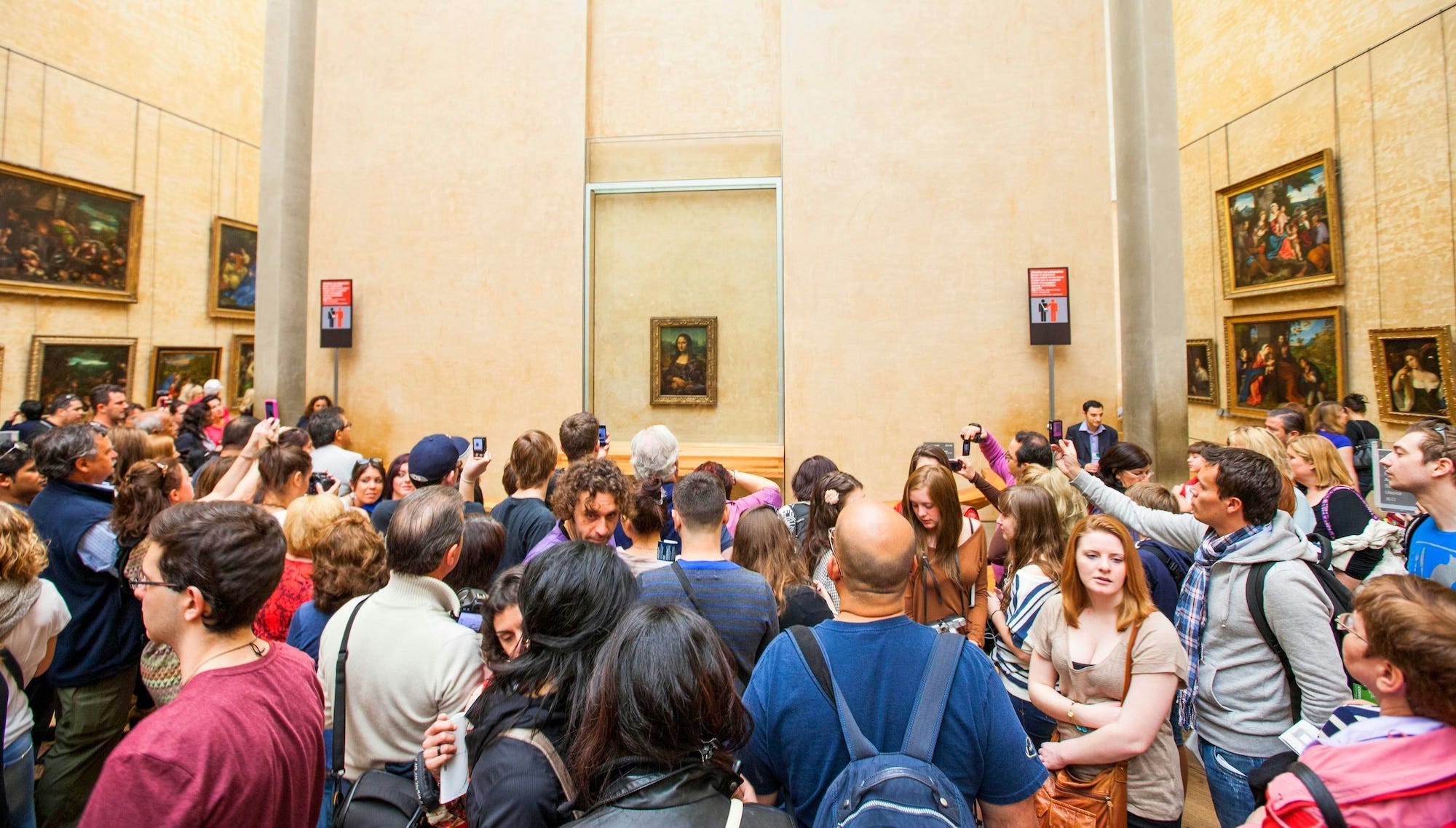
What If the Answer to Overtourism Is More Tourism?
Last year, after the summer holidays, I wrote about overtourism and why it is a dumb word, solving the wrong problem. When destinations become crowded, the quick response is usually some version of restriction, but there are better ways.
A recent Google Maps experiment is a perfect example of a better way. Researchers looked at highly congested roads across 10 US cities and changed the recommended routes for fewer than 2% of the trips. The result was around a 2% increase in speeds on those congested roads and an improvement in travel times across the network. The point is there was no restriction, just re-distribution.
This is engineering solving a problem. Politics and regulation mostly have a limited set of tools. When something creates a problem, restrict it, tax it, regulate it or make it more difficult (don’t get me wrong this is a critical function, we need boundaries, but as the saying goes when all you have is a hammer every problem becomes a nail).
Engineers have another set of tools: inventing a better solution.
Most “overtourism” is a congestion problem. Visitors arriving in the same few months to the same attractions at roughly the same time. I remember speaking to someone who worked in the famous town of Positano on the Amalfi Coast, he explained that for 2 month a year he had work, the year of the year he didn’t. So he moved to Sorrento. I drove by the town in one of those two month, I didn’t stop because it was so full.
We have sophisticated technology for pricing airline seats and hotel rooms, targeting advertising and predicting what someone wants to buy. What if we focused solutions on distributing demand better? Making it so much more interesting to travel at a different time and routes. Making it OK to travel off season etc.
The Google Maps congestion problem is much simpler than tourism, I know. But the principle is interesting: congestion does not necessarily mean you have too much demand and that restricting is the solution. It can mean that it is just too focused on the same paths.
What if twice as many Americans, Europeans, Chinese, Indians, Arabs and everyone else spent time in each other’s countries, ate together, worked together and understood each other a little better? How much good could that bring?
So maybe we should ask technology and engineers to solve for double the volume of tourism. Between better marketing, better technology and some real problem solving maybe we can grow the pie in a sustainable way.
About me: I'm a fractional CMO for large travel technology companies, and the co-founder of Pragmatik, an agency that drives MQLs through highly relevant content and distribution. You can find out more at wearepragmatik.com. Demand signals are getting weird
The recent hype from the new AI agent that can book things highlights a new problem we’re going to see more of. Huge spikes in demand signals which aren’t real demand but bots aggressively trying to book stuff. This is going to be hard to work with until before it settles down.
1 CUSTOMER 200 REQUESTS
Google Spam Updates and SEO
Google’s August spam update produced some spectacular ranking losses, with many top-ten URLs reportedly falling beyond position 100. The sensible response is also the boring one: improve content instead of guessing at algorithm hacks. With AI search adding even more uncertainty, solid sustainable SEO fundamentals seem more valuable rather than less.
SEO FUNDAMENTALS
The $2 Guest Experience
Some of the best hospitality improvements are almost embarrassingly small: a sticker explaining a difficult balcony handle or homemade ice cream. None of these requires a transformation program or giant technology budget. I like these examples because guest experience is often won through dozens of small moments rather than one spectacular innovation.
GUEST EXPERIENCE
Everyone just became a creative director
If one doesn’t need to learn how to hold a brush correctly or how to handle a bezier curve and still manage to get one’s ideas created, then we can all be creative directors and build amazing things. Canva’s co-founder thinks that too.
CANVA CREATIVITY
Four Futures for AI Travel Booking
Lufthansa Innovation Hub mapped four scenarios for how agentic AI could reshape flight booking in the 2030s, particularly around consumer trust and control of data. Pretending we know exactly how consumers will behave five years from now is probably the least credible option. So different scenarios are a great way to test it. From these we should be able to figure out what we need to prepare for.
AGENTIC TRAVEL

AI is Mostly an Organization Problem
AI makes building automations easier, but spotting the right workflows and is still the difficult part. This is probably why transformation is much harder than simply buying AI software. Best advice I ever heard on this was automate the easiest stuff first.
AI TRANSFORMATION EASY AUTOMATIONS
Sofitels Croissants and Nespressos
Sofitel and Nespresso are creating a limited croissant-and-coffee pairing across 20 properties. It’s brilliant product placement. Great hotels can do these and it becomes a new type of experiential retail media. I do remember a French Pastry Chef once asking me why in the world would one add something to a croissant.
HOTEL BRAND EXPERIENCE
AI Could Rewrite Hotel Distribution
Corporate booking tools such as Concur and Navan increasingly use AI to reinterpret hotel information agents/travelers see it. This will become a fundamental distribution change. All those great descriptions, the superlatives, the marketing spin will move away and get rewritten by agents to tailor to the readers needs. And agents will increasingly know what their customer wants to see.
AI HOTEL DISTRIBUTION
America wants 100 Million visitors
The U.S. travel industry is targeting 100 million international visitors a year by 2030. It’s a big place and there’s a lot to see and it was built in the last 250 years so maybe it wont get too crowded (as long as they don’t all go to Times Square at the same time).
US TOURISM GROWTH
Skip the Front Desk
Stayntouch surveyed hotel guests who said they prefer smartphone checkout, while hotels using kiosk check-in reportedly see significantly higher satisfaction. In many cases I tend to agree. The “human connection” of check-in and check-out is transactional it isn’t really a human connection. But when self-check-in fails and one then has to do human check-in as well it is worse.
HOTEL SELF SERVICE
Dashboards, Analytics in AI age
I had coffee with an industry friend in Paris this week. We discussed AI, he was telling me how many hoteliers and hotel groups are using Claude or GPT for their analytics. They just throw all their reports at it and query it and make custom dashboards. True there is no real regard for security and privacy. But they finally are getting what they need. As I wrote a while ago, that hidden “software” layer (aka spreadsheets) is being disrupted. But how far will that go? All analytics? All dashboards?
SPREADSHEET SOFTWARE AI HOTEL OPS
• The Spreadsheet that Broke Britain - Link
• Where to get inspiration for hospitality - Link⁺
• Steinway Pianos Marketing lock-in - Link
• The Hotel Yearbook Goes All-In on AI - Link
• The Caesar Salad - Link
Did you know: The word "tourism" comes from the word "tour," which comes from the Old French "tour," meaning a journey or a trip. It was influenced by the Latin "tornare," meaning to turn or to go around. The modern use of "tourism" began in the early 19th century to describe the act of traveling for pleasure. Defined using Lomar Dictionary⁺