


Hello,
Kids are all back in school, holidays for the parents as they say. So let’s get caught up on what happened last week.
PS: If you haven’t filled out my survey, I’d love to have your reader feedback.
Best, Martin

Pragmatik builds high-converting
MQL engines through targeted content.
Just find out more ➛

Opinion
The Battle for the Interface is Starting Again
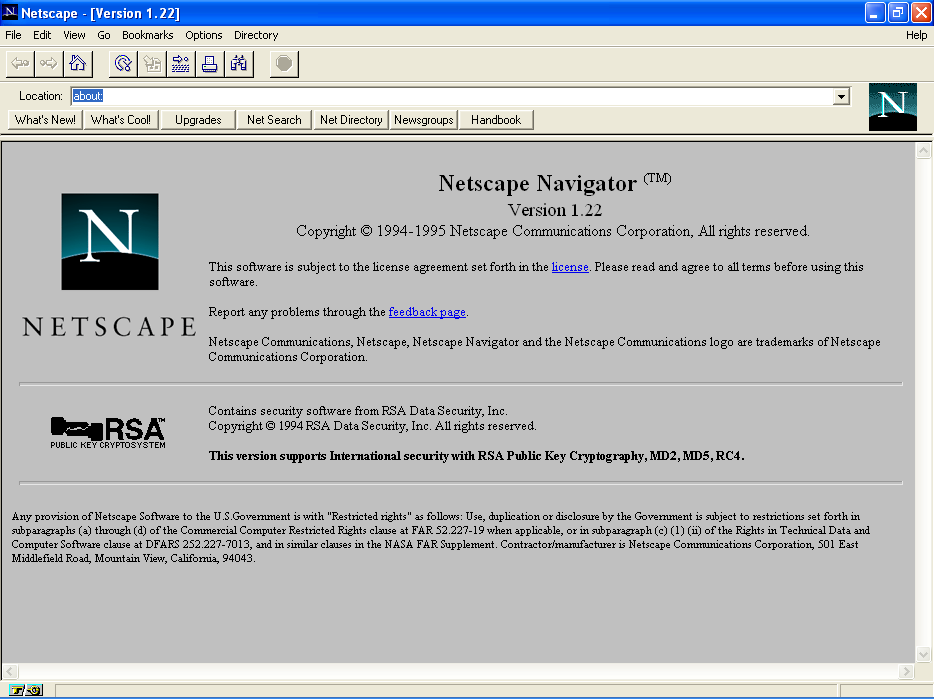
AI language models are changing how we interact with systems and technology. The point and click model is evolving for the first time in 30 years. This means the battle for the customer interface is back.
We went through this when the internet arrived. Before that, discovery happened through travel agents, brochures, hotel brands etc. OTAs mostly won in the point-and-click era of search, filter and bookings.
With conversational interfaces things are going to change. Instead of scrolling through 200 hotels, it is much easier to say: “Find me a quiet boutique hotel in Rome, walking distance from good restaurants, with a pool suitable for toddlers, and a room that actually works for a family of six”, (this is probably an impossible request, tell me if you found one).
But I’m not sure the infrastructure underneath can deal with the data needed. Today things are just noted as “Pool: Yes/No” “Connecting rooms: Yes/No” etc.
Current hotel distribution systems are designed around a simple concept: availability, rates and inventory (ARI). That works when the guest is doing all the searching and reading and clicking and filtering. It works much less when an AI is doing that as the data simply isn’t granular enough.
So even if OTAs become the plumbing behind AI, basic ARI will no longer be enough. An AI can only give a great answer if the underlying systems actually has the answer. This is where attribute-based selling might finally have its day of glory. For years, the idea has been discussed as a better way to sell rooms based on specific features rather than fixed room types. But it was going to become an interface problem, nobody wants to tick 8 boxes to build their room-rate. AI on the other-hands doesn’t mind, conversational search is basically attribute-based search on steroids.
However, almost none of the three letter systems (OTA, GDS, PMS, CRS) were built for that. Adding an AI layer will essentially just convert a language query into a simple search string (ie “Hotel in Rome with pool”, Pax:6, Date:03/27/2028) and that won’t really answer the question of the guest.
So it’s going to take a serious rethink and re-architecture of all the plumbing that connects hotels and distributors. And it isn’t going to generate any immediate revenue. Will OTAs have the patience to do it? More importantly will their investors?
About me: I'm a fractional CMO for large travel technology companies, and the co-founder of Pragmatik, an agency that drives MQLs through highly relevant content and distribution. You can find out more at wearepragmatik.com. Three Qs Before Adopting AI in Hospitality
There’s a lot of pressure right now to “do something with AI”, but these three questions from Jeff B. are a good filter: does it improve the guest experience, make work easier for the team, and is the data actually ready? Too many AI projects seem to start with the technology rather than the problem. As I’ve said before I think the best applications will be the ones guests barely notice because they simply make the operation run better.
AI HOTEL ADOPTION
Product Feeds Become Visibility
ChatGPT shopping results are reportedly shifting towards structured product feeds supplied directly by brands rather than relying primarily on scraped product pages. Hotels have great ARI feeds, but we need to start making much more detailed room feeds as I mentioned in my column above
AI PRODUCT FEEDS
Google AI and the Distribution Shift
Google’s AI Mode could change travel distribution again by moving more of the discovery process inside Google itself. OTAs owned visibility in traditional search, but that power could shift. Independent hotels should probably pay particular attention to whether their content, inventory and rates can actually be understood by these systems. As I mentiond in my column plus article above, more data in the feed will become a necessity.
AI TRAVEL DISTRIBUTION
What Should Stay Human?
The idea of “Human Reserved” is an interesting way to think about automation in hospitality. As Scott Eddy comments, just because AI or robotics can perform a task doesn’t necessarily mean guests will want them to. Repetitive processes are obvious candidates for automation, but hospitality still most of its value from human attention.
HUMAN RESERVED HOSPITALITY
The First Principles of Hotel Distribution
I wrote the first principles of marketing, Siv Forlie make the Principles of Hotel Distribution. The mechanics of distribution matter, but they should support the basic principles rather than become the objective themselves. A great list.
HOTEL DISTRIBUTION PRINCIPLES

What Makes a Hotel Visible to AI?
A study of 27,360 AI-generated answers around Barcelona hotels found that Google review volume was the strongest signal associated with visibility, while hotel websites were cited in only 7% of answers. Third-party guides, reviews and Reddit appear to matter a lot. The top 20% of hotels also received more than 80% of mentions. We’re in early days a lot of spam control is still to be worked out.
AI HOTEL VISIBILITY
Did Booking overtake Expedia in B2B
BTIG estimates that Booking Holdings generated 196 million B2B room nights in the year ending June 30, versus Expedia’s 170 million. If accurate, that overturns the common assumption that Expedia still dominates hotel B2B distribution. B2B distribution can become very opaque very quickly, also it operates on much more structured attributes and has higher frequency.
B2B HOTEL DISTRIBUTION
Airbnb Hires Booking.com Veteran to Grow Hotels
Airbnb has appointed Pepijn Rijvers as Chief Business Officer. The appointment makes Airbnb’s hotel ambitions look increasingly serious. It is a proven market, they’re not creating a new one. Wall Street seems to love the idea with a big stock jump. Incremental improvements rather than reinventing a market.
AIRBNB HOTEL EXPANSION
AI vs the travel herds
Centralized recommendations have helped create concentrations of tourists around the same location. I’ve written about this many times. This article discusses how AI could potentially widen discovery by matching travellers with more specific interests, or it could simply reproduce the same popularity signals in a new interface. We have yet another chance at improving distribution, would be great to take it this time.
AI TRAVEL DISCOVERY
Travel Advisors Are Selling the Upgrade
Travel Advisors charging for planning, with fees around $350 for a week-long trip and considerably more at the top end. That changes the advisor relationship because they get paid by the guest, no the hotel. With AI I think (hope) this model grows. Some will take commissions, some will want a fixed fee. Whichever it is, the idea of someone taking care of the delayed flights, clawing back the refunds, re-booking the trip etc, is welcome.
TRAVEL ADVISOR VALUE
Brand Entertainment
Short-form scripted “Micro Drama” is moving from entertainment format to advertising vehicle, similar to the soap operas but in a new way. I don’t want another 15-second product ad, but a fun story could work. Gap even put Entertainment on their org chart. Hotels and destinations have almost unfair advantages here because their products are already full of characters and settings. But doing something not boring and not cringe is where the artists will strive.
MICRO DRAMA MARKETING + GAP FASHIONTAINMENT
• 5 Travel Prompts - Link
• Where to get inspiration for hospitality - Link⁺
• Updates from Copenhagen Design Week - Link
• The Hotel Yearbook Goes All-In on AI - Link
• AI and Cybersecurity - Link
• Best campaigns of the week - Link
Did you know: The word "interface" comes from the Latin "inter-" meaning "between" and the English word "face," meaning "surface." It first appeared in English in the late 19th century to describe a surface forming a common boundary. Its use in technology and computing began in the mid-20th century. Defined using Lomar Dictionary⁺