


Hello,
I’m still in the US, and I’m surprised how much Americans are still talking about the world cup. Usually interest wanes when the team leaves but this time there’s more to talk about, more drama?
Also, am impressed with how fast American airports are improving. Moving to the new 3D luggage scanners. Getting proper tray systems. etc. Really great to see.
PS: If you haven’t filled out my survey, I’d love to have your reader feedback.
Best, Martin
Pragmatik builds high-converting
MQL engines through targeted content.
Find out more ➛

Opinion
Attention, the World Cup, Travel and Media
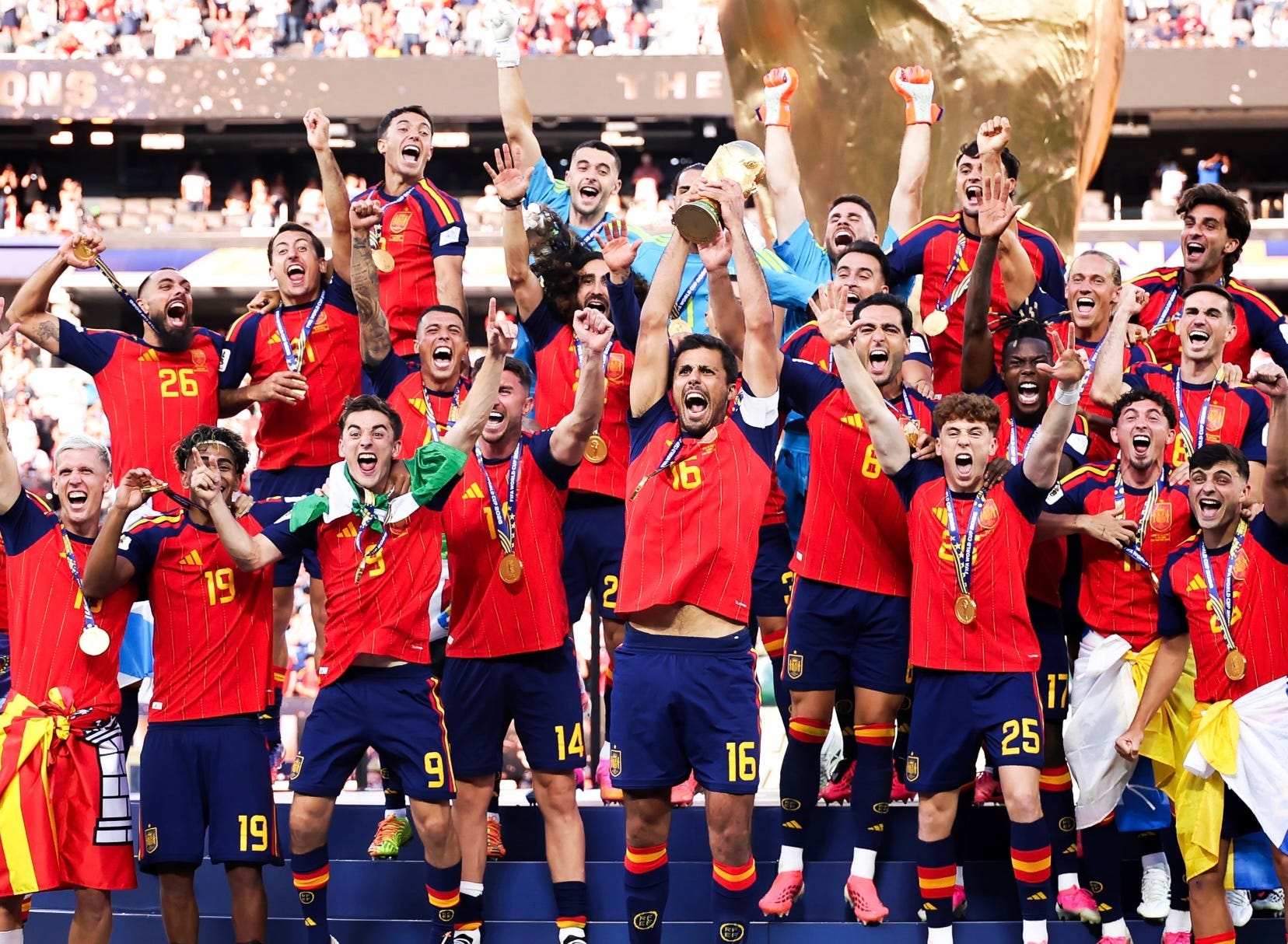
There is a strange narrative exchange happening between Europe and the United States on social media.
When I tell people in the U.S. that I am from Paris, some look at me as if I recently escaped a war zone. They ask about immigration and whether the city is still safe. I normally assume they have been spending a little too much time consuming social media.
Often, in the same conversation, they tell me that Europeans who travelled to the U.S. for the World Cup were surprised to discover that America was actually quite nice.
That these two thoughts can live comfortably beside each other is impressive.
The conclusion seems to be that Europeans were misinformed about the United States. Yet, at no point does that person consider that they might also be misinformed about Europe. Apparently misinformation only travels in one direction, usually from somewhere else.
This is not really a political problem. It is a media business-model problem, and it is destructive for travel.
The problem is also not new. In the early 2000s when France refused to join the Iraq War, parts of the American media had a wonderful time explaining why France was hostile, unsafe, and generally a terrible place for Americans to visit. There were stories about anti-American sentiment, boycotts, protests, and even “freedom fries.” The details change, but the commercial incentive does not.
Today, many people who believe mainstream media is lying to them somehow believe social media is not. I often explain, mostly in vain, that both systems are rewarded by the same currency: attention.
As long as attention determines revenue, information will naturally move towards whatever attracts the most of it. And that is not a news problem. It is a storytelling question.
A good story needs a hero, an enemy, conflict, danger, forbidden knowledge, secret plots, dark motives, corruption, romance, money, or preferably several of them at once. The more sensational a story is while remaining just credible enough, the better it performs.
This has been true for centuries. In some ways, news is probably more factual today than it was 100 years ago, when verification was difficult and publishers could invent almost anything. But the economic reward for drama remains.
As our industry depends on people far away feeling safe to travel destinations, hotels, airlines, and travel companies need to communicate more, show more, and tell better stories. Not polished corporate stories that nobody believes, but frequent, specific, human evidence of what places are actually like.
Because when media is rewarded primarily by attention, it will eventually say whatever earns attention.
Travel has to make reality more enticing than the fiction.
About me: I'm a fractional CMO for large travel technology companies, and the co-founder of Pragmatik, an agency that drives MQLs through highly relevant content and distribution. You can find out more at wearepragmatik.com. How Airbnb Made Itself French
Airbnb’s latest French campaign is about behaving more local. Sponsoring the Tour de France to get a familiar national rituals rather than simply advertising destinations. It is a great way to reframe the “big american tech company” narrative (for non-Americans this is actually not a positive look). But it is also a lot of work and costs.
AIRBNB FRANCE

AI Search stats
Similarweb’s LLM traffic data makes the growth of AI platforms easier to see, also look at the scale on the left. Most of the AI platforms aren’t growing that much. Google and AI overviews are still massively above the others.
AI SEARCH VISIBILITY
Sonder Is Back. Sort Of.
TravelAI has acquired the Sonder name from bankruptcy proceedings and relaunched the website as an affiliate-marketing platform. Not sure how this will work. There are still hundreds of locations on the internet called Sonder (Google maps and others) so there will be a strange transition period.
SONDER BRAND / SONDER TIMELINE
Make Coca-Cola More Coca-Cola
Coca-Cola’s latest brand update leaves the logo alone and focuses instead on using its familiar ribbon, script and red more consistently across markets. It’s pretty sharp how they’ve done this. I believe it is going to leave a bit of confusion on the bottles and cans. But this is Coke. They are the most recognizable brand in the world, and despite that they spend $4-5b a year rent space in your mind.
BRAND DISTINCTIVENESS / 5B DOLLARS 
The Data Behind Hybrid Work
WFH Research has been tracking working arrangements and attitudes since COVID-19. We often hear anecdotes about offices being either full or empty. There seems to be a pretty good data set. For hospitality, these patterns matter because they influence business travel, extended stays, urban demand and when people choose to move around.
HYBRID WORK

Major Events Still Break the Forecast
The World Cup once again showed how difficult it is to price hotel rooms around events. Some saw rates fall sharply, while some performed much better. Revenue management works well when demand follows recognizable patterns, but unprecedented events still bring gut feeling, FOMO and ego back into the equation. Either we’re over-thinking (too much gut feel vs just pace and pickup) or we’re under-thinking it (and we need to really figure this out).
EVENT DEMAND
DeepSeek’s Founder Speaks
A newly public conversation between DeepSeek founder offers a rare look at the thinking behind one of China’s most closely watched AI companies. IMO it is becoming more and more obvious that intelligence will be baked into all products. More like the switch from DOS to GUI, windows, mouse pointers, etc just became part of everything. We will have intelligence added to product menus, in-app search, actions, automation, etc. We wont know what model we’re using, it wont matter as long as it works.
DEEPSEEK STRATEGY
Brands as Mini-Drama Studios
TikTok wants brands to move beyond isolated short videos and start creating serialized mini dramas. Following my column above, this could be pretty cool. Not just for Tiktok but for all social channels. The difficult part will characters, pacing and storytelling the hollywood kind of problems.
TIKTOK DRAMAS
Hotels aren’t tool builders
Benedict Evans makes a good point that most people aren’t tool builders. So even if we give them a tool building AI wizard. They’re still not going to make tools. I lived this when we made DYI websites for our hotel clients - maybe 1% logged in. But hotels are process writers. And if those processes can be fed to an agentic AI to be automated we can alleviate a lot of work that exists because it exists. That isn’t tool building but it is something.
TOOLBUILDERS

• Prediction Market (PR spin for betting market) - Link
• Where to get inspiration for hospitality - Link⁺
• Matisse and colors - Link
• The Hotel Yearbook Goes All-In on AI - Link
Did you know: "Media" comes from the Latin word "medium," which means "middle" or "means." In English, "media" is the plural form of "medium." People started using "media" to talk about ways of communication in the 20th century. Defined using Lomar Dictionary⁺