


Hello,
I can’t recall a strategy meeting I’ve done that didn’t have sales, owners, investors et al explaining me that the company is also for this segment, and that segment and also the other segment. Focus is important. More in my column, for now here’s the newsletter.
Best, Martin

Clean electrolytes that support hydration
and muscle function, without the junk.
Find out more ➛

Hotel Inspiration Moves Upstream
Hotel distribution has always focused heavily on the booking moment, but this piece argues that many decisions are now shaped much earlier. Creator content, AI recommendations, etc. Word of mouth has always been top of the list and will be for some time. But it is safe to say, creators and AI recommendations are big new entrants on the list. And hotels / destinations need to think with that.
HOTEL DISCOVERY
About me: I'm a fractional CMO for large travel technology companies helping turn them into industry leaders. I'm also the co-founder of 10minutes.news a hotel news media that is unsensational, factual and keeps hoteliers updated on the industry. PMS as Infrastructure
Last week I argued that the PMS is and will be the future system of record. But Susanne Williams argues that it might be a lot more complex. She poses a lot of really interesting questions. Worth the read - and do drop your comments in there.
PMS INFRASTRUCTURE
Hotels Have a Leadership Problem
Lean hotel management structures can look efficient until one key person leaves. I’ve run hotels that way, it was exciting - but ridiculously stressful. If you wants a day that never looks like the last one, it’s a brilliant way to go. But for everyone else, I wouldn’t recommend it (it wasn’t fun for me). Yet, IMO hotels are a unique opportunity - anyone can become a GM, if you can cope and get things done. Probably a masterclass for any entrepreneur.
LEADERSHIP RISK
Loyalty and Credit Cards
Hotel loyalty programs and co-branded credit cards are becoming major revenue engines for the big brands. But it is moving loyalty from the hotel experience itself toward financial incentives, points, and status mechanics. Useful, yes, but I still wonder whether this builds real loyalty or just some kind of customer lock-in.
LOYALTY CARDS
Michelin Keys for Hotels
Michelin’s hotel Keys bring a familiar luxury signal into hospitality, but the interesting question is how much influence they will really have. Restaurants changed around Michelin because the guide created demand, status, and pressure all at once. Hotels are more complicated because service, design, location, and emotional experience are harder to reduce to a rating, and they already have a lot of rating systems in place. Still, if the philosophy is creating a destination (the original goal with the restaurant ratings), then it might bring a whole new concept to hotel ratings.
MICHELIN KEYS
Answering the question
Globally, the biggest mystery guests have (according to many forums read) is why and how do hotels change their rates sometimes doubling overnight. Travel is one of the few consumer industries that change so much, so fast. And it seems guests don’t understand it. Some RMS’ are tackling that question head-on.
CHANGING RATES⁺
A Trust Framework for Hospitality AI
AI can be a confident liar, an educated tourist, a trusted ally or an educated guesser. The framework with which the data is labelled, understood, managed etc will be the difference. But this is much easier said than done. Anyone who has looked into PMS data knows this - it’s a proper mess out there.
TRUSTED AI
Travel’s Future May Be Boring
The idea that travel’s future belongs to “boring companies” might be right. TNMT discusses that after years of big platform dreams and unicorn language, the companies solving operational problems may be the ones that last. Aviation tech, weather intelligence, fintech, and systems that remove friction are less glamorous than consumer apps, but they address real pain. In hotels the less tech is visible the better things are.
BORING INNOVATION
Spain Moves From Volume to Value
Watching Spain’s evolution in travel is interesting. From a very vocal problem with locals considering tourism as the problem. The government is looking at shifting from more arrivals, to increasing spend through better connectivity, infrastructure, and digital systems. Spain may become a useful case study in moving beyond volume without abandoning volume entirely.
TOURISM VALUE
Google’s Guide to AI SEO
Google publishing guidance on optimizing for generative AI search features is a sign that AI visibility is becoming part of normal SEO. The basics probably still matter: useful content, clear structure, authority, and pages that answer real questions. The mistake would be chasing AI optimization while neglecting standard search hygiene. Hotels should get the fundamentals right before inventing a new acronym for the same work. Plus, Google’s SEO advice was always “just make great content we’ll handle the rest”.
AI SEARCH
Opinion
Are you the cheapest or the best?
There’s only two choices in the customers mind, is this the cheapest? or is it the best?
The cheapest is easy. It is measurable, comparable, and totally objective. Two products, same features, one costs $1000 less. Decision made. Just a number, and numbers are very good at ending arguments.
The “best” is where things get more interesting, and much messier. Take cars. Nobody walks into a dealership saying they want something mediocre. They want the best car for their budget, the best fuel efficiency, the best design, the best engine, or even the best color. It is always the best, just filtered. This is where marketing actually lives.
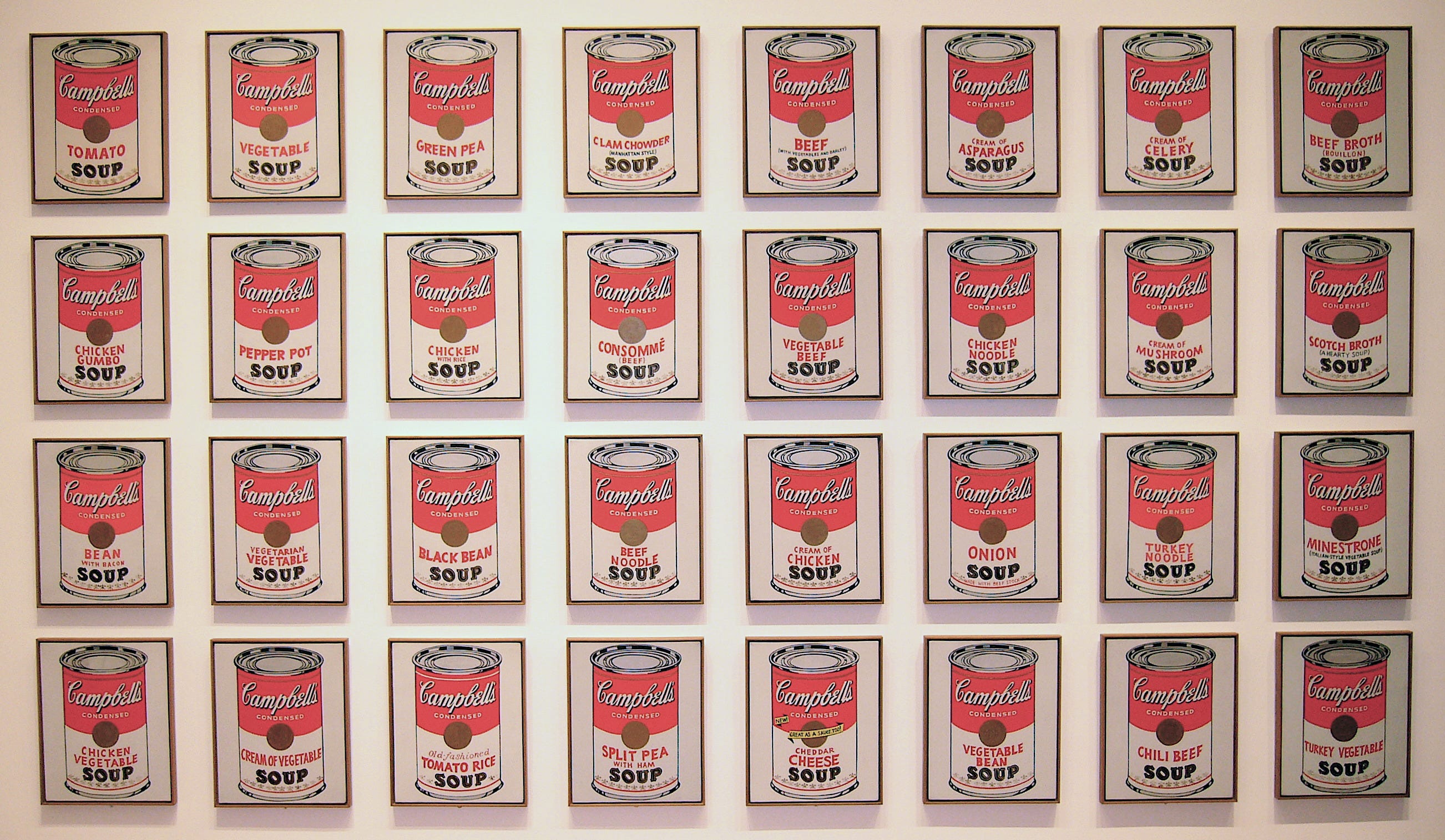
The job of marketing is not to be moderately good across the board. The job is to define what “best” means for a specific audience and then own that definition completely. And yet, so many avoid doing this because it forces a hard choice. You cannot be the best for everyone. You have to decide who you are really for, and by doing that, you also decide who you are not for.
Ask a hotel tech company where they are the best, and the answer often starts sounding like a checklist. Best for small hotels, best for large hotels, best for resorts, best for independents, best for chains. At that point, it means nothing. This is not a new idea, it appears in every positioning framework, every product market fit discussion, and every brand strategy textbook. And still, in practice, it is ignored.
Why? Because choosing what you are best at is uncomfortable. It means excluding things. It means admitting that you are only exceptional for a specific group of customers. It is much easier to say you can serve everyone than to say you are going to be exceptional for a few. But the market clarity. This also applies to hotels. Look at most chain designed hotels today, they’re essentially commodities with a logo. They can fit any brand, just change the curtains. But the new brands are focused.
Choosing to be the cheapest is a valid position. In many ways, it is simpler. You do not need complex messaging or emotional storytelling (though RyanAir does a great job). You just need to be cheaper, and the proof is in the price. So if you are not the cheapest, then you have to be the best there is no attractive middle ground where people actively search for the second-tier option.
This becomes even more important as choice increases and platforms, marketplaces, and AI compress options into shortlists. When fewer options are shown, the winners will be the ones that are clearly superior in a specific way or clearly cheaper. Everything else risks disappearing into irrelevance.
Working out your positioning is not about describing your product. It is about deciding what you want to be the best at, for whom, and then having the discipline to ignore everything else: 1. Start small. 2. Own the niche. 3. Win it (or change). 4. Then expand.
This is super obvious in hindsight and in an column like this - but it takes a lot of courage to implement in real life. I wrote about how brutal those meetings can be here.
• Why Business Stories Work - Link
• The Guide Competitors Hope You Miss - Link⁺
• Turning World Cup Prices Into a Campaign - Link
• Why everyone’s launching a beverage brand - Link
• Louis Vuitton Mayfair Hotel - Link
Did you know: "Amazing" comes from the verb "amaze," which has roots in Middle English "amasen," meaning "to confuse or surprise.” "Amaze" is related to "maze," a state of confusion or puzzling. The "-ing" ending turns the verb into an adjective, showing the quality of inspiring surprise or wonder. Defined using Lomar Dictionary⁺
This is one of those things that sounds obvious once you’ve lived through it.
The companies that try to win on “best” or “cheapest” usually end up competing forever. The memorable ones are often the ones that become very specific about who they are for and what they refuse to be.