


Hello,
PMS Wars article I wrote a few years ago continues, at the time the main point was that we were seeing a massive shift to cloud. That’s still happening. But now that we’re seeing where technology is going with more agentic and AI, we’re hitting the next phase. And I don’t think PMS is going to go away. See the column.
Best, Martin

Clean electrolytes that support hydration
and muscle function, without the junk.
Find out more ➛

Airbnb and AI Distribution
Airbnb is amazing at being in the news, this week their CEO make headlines stating that AI distribution isn’t solved. The interesting part is not whether AI can answer a booking question, but whether it can reshape how guests compare homes, hotels, price, location, and experience. I think he’s totally right - there isn’t a great UI yet some kind of blend of chat, filtering, point and click and visual comparison still needs to be worked out.
AIRBNB AI + AI INTERFACE
About me: I'm a fractional CMO for large travel technology companies helping turn them into industry leaders. I'm also the co-founder of 10minutes.news a hotel news media that is unsensational, factual and keeps hoteliers updated on the industry. Dirt Is the New Luxury
The idea that “dirt is the new luxury” captures something real in hospitality. Guests are increasingly drawn to places that feel grounded, natural, imperfect, and connected to land rather than polished into sameness. It is a different kind of luxury something more hands-on than hands-off. I don’t think one replaces the other though.
RURAL LUXURY
An AI Braintrust?
The idea of an AI braintrust is useful because most companies are not short of AI tools, they are short of judgment. The setup that Neil Perkin recommends here is quite interesting. But I would seriously warn people from relying too much on AI “advice” in my experience they seem perfect in areas where one doesn’t have enough experience to have judgement. But where you have good experience you will notice that the AI advice is weak.
AI BRAINTRUST
Kayak Founders Reunite for AI Travel
The Kayak founders working on an AI travel startup under Booking Holdings is exactly the kind of move to watch. They have track record in building stuff. As Airbnb CEO mentioned AI travel search is far from solved. Some really talented people are working on this problem. Will we see a breakthrough this year?
AI TRAVEL
Playground of Possibilities
Designing possibilities in hotels seems to sit in the confusing area between designing with purpose and intentionally designing without purpose. “No iconic hotel ever became famous for its rooms”. Maybe this is why the best hotels I have experienced have been millionaire pet-projects that aren’t too worried about profit.
CREATIVE SPACE
The Office Space as Hospitality
Maybe Wework founder was just too early? The office becoming a hospitality business is one of the more obvious ideas that many landlords still resist according to Bashar Wali. If people can work from home, the office has to earn the commute through experience, service, community, and usefulness. Hotels have a lot to teach offices, especially about arrival, atmosphere, and care.
WORKPLACE HOSPITALITY
Hotels need blogs again
An in-depth AI search study in the hotel industry highlights that providing large amounts on context around a hotel increases the possibility of the hotel getting found on AI search. I think a lot of people have been saying this for a while, but finally some real data about it. Also lots of other interesting reads in the link here.
QUERY FRAMING
Tying the GM to a Tree
It is weird that in our industry what is considered a great GM is someone who is constantly firefighting. They’re looked at as great problem solvers etc. But in theory the best GM would be someone nobody ever sees, because nothing goes wrong. Utopic but ultimately true. Here’s another take on new hotel GMs.
HOTEL MANAGEMENT GM TURNOVER
Expedia’s Strong Quarter, Weak Reaction
Expedia reporting its strongest first quarter and still facing a negative market reaction says a lot about investor expectations. Companies are being judged not only on results, but on whether their model still looks dominant in an AI-shaped future. I’ve written my views on this before. OTAs have gained customer trust, they need to figure out how to keep it. Airbnb and Booking are clearly working on it. Is Expedia?
EXPEDIA RESULTS
Kempinski vs the Sea of Sameness
Asset light is profitable there’s no question. In the long term it also means the “brands” and hotel buildings become commodities. Luxury experiences are hard, there’s an element of je-ne-sais-quoi required. Since the space is inherently tied to the experience it is interesting to see how this moves in the industry.
BRAND CONTROL ASSET LIGHT
Opinion
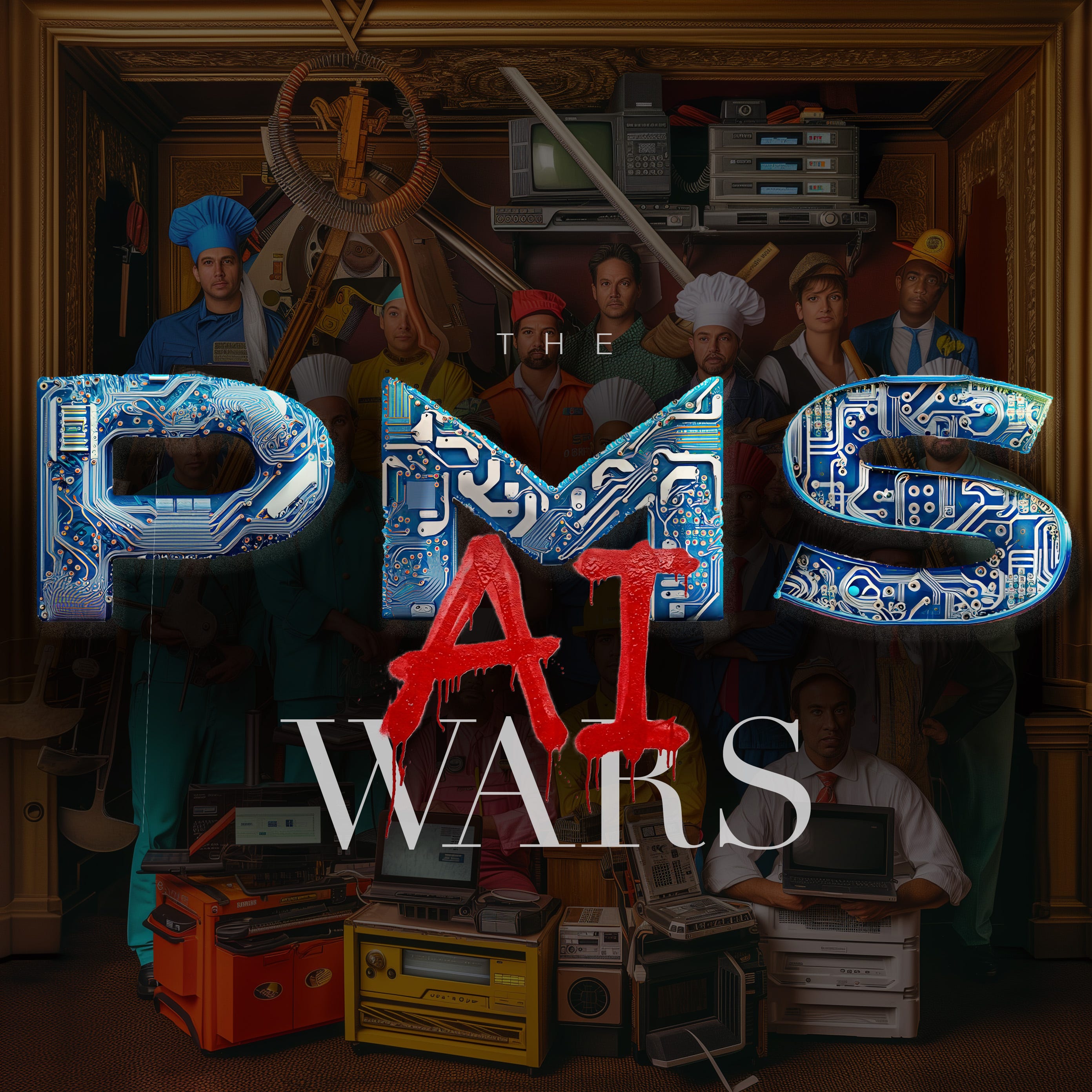
The PMS Wars and AI
I read The PMS Era Is Ending a few days ago and it raised good points, especially around how slow PMS innovation has been historically, I believe this problem alone has been one of the biggest issues in hotel tech innovation over the last three decades. But, I do not think the PMS era is ending.
One of the recurring problems in technology is that everyone tends to see the industry from the center of their own world. Distribution people believe distribution is the heart of hotel tech. Marketing agencies see the fight against OTAs as the main battle. CRM people see guest data as the center. Payment providers think payment rails are the foundation of everything.
My view is, payments are infrastructure, not strategy. Distribution is the key factor in revenue, but it is not the whole business. The fight against OTAs is really a question of controlling your own distribution, not eliminating intermediaries. Etc.
Stronger data
AI is going to force the industry to have stronger and better data channels. Yes, one can suppose that AI can handle the mess of data so why bother. But then what do you do when it starts to mess up rates and availability? Because it based the actions on some fuzzy logic.
Apps vs platforms
In theory, best-of-breed is ideal. The best RMS, the best CRM, the best guest messaging platform, etc. But trends are moving toward consolidation. One major vendor is simply easier to manage. One support team, one commercial relationship, one negotiation, and fewer integrations to maintain. A specialist product may be stronger in one category, but for hotels who mostly deal with the unpredictability of humans, reliability of systems is better than perfect systems.
For all we say about AI being able to handle unstructured data, if guest profiles are in one place, rooms in another, F&B in yet another, and operations elsewhere, I believe the error rates will be even higher. I’m sure this is debatable. Just like the Lidar+vision vs pure vision debate. But logically one clean source will always be better for humans and AI.
PMS and the risk of stagnation
The criticism of slow PMS vendors is fair. For decades, PMSs have been the bottleneck of hotel innovation. Closed APIs, expensive integrations, poor documentation, and painfully slow development cycles have made them obstacles rather than enablers.
Entire categories of hotel tech exist because PMSs failed to evolve. CRSs became separate because PMSs never solved distribution properly. Customer data platforms exist because guest profile management inside many PMSs is so bad that in some cases, it is easier for hotel staff to create a second guest profile than to find the original one. That is not a data problem, it is a product failure.
There is a future risk with platform consolidation is that once vendors know customers are locked in, innovation slows even further. Once the vendor is settled in and they know how hard it is for their customers to switch there will be little to no incentive to innovate. I don’t have a magic answer to this - but maybe PMS will build free migration tools which would suddenly make shifting a lot easier.
Theoretically, since hotels could build their own interfaces they wouldn’t need to re-train their staff on new systems.
The AI Shift
Every vendor is adding copilots, agentic assistants, dashboards, and predictive tools. Most of it is useful, much of it will be surface-level enhancement at first. But that’s OK we need to find the way.
A few months ago, I asked the CEOs of several PMS vendors where they believed MCP (or whatever the protocol will be) would/should sit. They didn’t reply or told me “they don’t know”. Maybe they consider this a possible threat to their business model? I’m probably overthinking it.
I think PMS should be the trusted operational layer that allows AI to function reliably across departments. Could a third party do that instead? Of course. But the closer you are to raw operational truth, the stronger your position becomes.
Agentic layer in PMS
So contrary to the original article I don’t believe AI will reduce the importance of the PMS. But the PMS might become less of an interface and more of an infrastructure layer. Its value moves away from screens and toward trust, data quality, and orchestration.
I looked at a lot of agentic in saas. My over-simplified conclusion is that all agentic is (currently) doing is solving extremely bad UI and UX design. Take moving reservations as an example. In many hotels, the guest experience at reception is now worse than it was before computers. Staff are trapped behind endless clicks, slow workflows, and systems that force them to serve the screen before they serve the guest. So we create an agent that can “move the reservation of Joe Smith the Platinum member to tomorrow”. It goes through all the steps and does it.
Huge advantage in time. But it begs the question, why wasn’t it like that in the first place? Why do we have these ridiculous multi-click systems?
AI will not just improve PMS workflows. It will expose how much bad UX was normalized for decades. It will show how much unnecessary complexity hotels accepted simply because poor software became standard.
That does not mean the future is chat assistants everywhere. Point-and-click is still an excellent interface, especially in front of guests. The goal is not replacing every screen with chat. The goal is fewer bad workflows, better logic, and systems that support hospitality instead of slowing it down.
The PMS War
The future PMS may look less like traditional software and more like infrastructure. The interface may matter less than the trustworthiness of the data underneath it. As I mentioned above, one could imagine hotels building their own UI layer on top of the system, but I think I’m getting ahead of myself here - hotels haven’t been great at building their own tools.
So what is the PMS war? Well lets see who manages to build the strongest data infrastructure for hotels and the best agentic layers on top of it. The race is on, nobody wants to be replaced. A lot of money has been poured into making the best next platform.
That is the real PMS war, but there wont be a single player. Chains are too different from groups who are too different from independents and so far this industry has proven the Innovator’s Dilemma quite wrong with very few solutions moving from small hotels to chains. So I believe that the future of PMS in the AI era is about who becomes the trusted authority of truth inside the hotel.
• Hong Kong Design Projects - Link
• The Guide Competitors Hope You Miss - Link⁺
• Amazon Opens Supply Chain to Others - Link
• Visually exploring the hotel world with Flipbook.page - Link
• How NASA built Artemis II computer - Link
Did you know: "Artificial" comes from the Latin word "artificialis," meaning "made by art," from "artificium" (craft, skill). It entered English in the late Middle Ages and originally described something constructed or made with skill, not occurring naturally. Defined using Lomar Dictionary⁺