


Hello,
It’s super hard to keep up with everything AI, it’s probably a full-time job. And it wouldn’t be a super productive one because by the time one has mastered one solution, the next one is released. But Google launched a cool system called Stitch. Anyhow, back to the newsletter.
Best, Martin

                                Klairhaus, the perfect employee and customer gifts.
                                     Quality, crafted, every day items for the office.
                                                               Find out more ➛

Google Maps Enters AI
Google’s “Ask Maps” feature shows how AI is becoming the way to interact with tech. In contrast, searching on my Settings having to type the exact word “Displays” to adjust the screen settings is becoming frustrating. We’re going to move to from keywords to concepts. All tech will need to adopt this in their UI.
AI MAPS
About me: I'm a fractional CMO for large travel technology companies helping turn them into industry leaders. I'm also the co-founder of 10minutes.news a hotel news media that is unsensational, factual and keeps hoteliers updated on the industry. AI Agents in Travel
According to IDC prediction, AI agents will be central in planning trips and dining experiences this year already. They predict fewer clicks, fewer choices, and potentially fewer brands in the decision set. A lot of this has been predicted already, I don’t think it is this year, and I think the “fewer brands” isn’t how history goes. See my column below.
AI AGENTS
Banks Entering Travel
It seems banks are emerging as serious players in travel distribution, leveraging their customer data. A discussion that they’re competing with OTAs exists as well, but where is the best inventory? I think it is a smart brand extension. As I write below, brand trust will be a growing need.
BANKS IN TRAVEL
Hotel AI That Actually Does Work
Continuing example of an AI assistant actually usable in hospitality (still a skunkworks project) building a full housekeeping schedule in minutes actually doing operational grunt work. These small efficiencies compound quickly in hotels. It’s not glamorous, but it’s exactly where AI wins. Many say AI will replace SaaS, I think it will replace Excel.
AI OPERATIONS
AI-Native Services Attract Billions
VC interest in AI-native service providers is a major shift in how tech and services will be built and delivered. Basically the idea is that VCs want to invest in service companies that are built using AI, the thinking is that for every dollar spent on software 6 are spent on services. So they want to capture that market. So are we going to move from revenue management systems to revenue agencies? Or will it become $1 for tech and $2 for services?
AI SERVICES
World Cup Demand Reality Check
Despite the hype, RevPAR growth for the 2026 World Cup is expected to be modest at 1.7%. Big events don’t automatically mean big profits. I never saw this more clearly than for the Paris Olympics. This is where AI and a proper revenue management system not managed by humans with all their emotions would have made a difference.
WORLD CUP DEMAND
PMS Change Is About Mindset
Switching a PMS isn’t just a tech upgrade, it’s an organizational reset. I did one once, vowed never to do it again. In hindsight I wished the provider had been there to help manage the transition, help me foresee the mess it would make. Guide me through the process. Because as I wrote last week, managing the tech was really not my biggest concern on day-to-day basis.
PMS CHANGE
Social Media Crowding Tourism
Tourism is increasingly driven by expectations created online, not reality on the ground. I guess that’s the modern version of “Pictures from Italy” by Dickens which probably crowded lots Italy at the time (probably none of France). Destinations like Hallstatt show how viral exposure can overwhelm infrastructure which gives that famous impression of “over-tourism”. But I think everyone will always want to capture the instagram shot. It’s like trophy travel.
TOURISM EXPECTATIONS
Google’s Quiet Agent
Google is rolling out agent-like capabilities directly on some Pixel phones. I personally think this is where the agents will primarily sit. Things like OpenClaw, Claude App etc will probably become parts of our phones and computers with access to our files and some embedded security items. At least if you delete all your files, then it is your fault and not some cloud company. Feels like a slow but strategic play for Google. If Apple is working on the same strategy - that’s even slower.
GOOGLE AGENTS
AI Didn’t Kill OTAs (Yet)
OpenAI stepping back from bookings boosted OTA stocks, but that’s likely a temporary signal. OTAs may survive, but their role could shift significantly. I’ve written about this a few times including my analysis of the possible options.
OTA FUTURE
Opinion
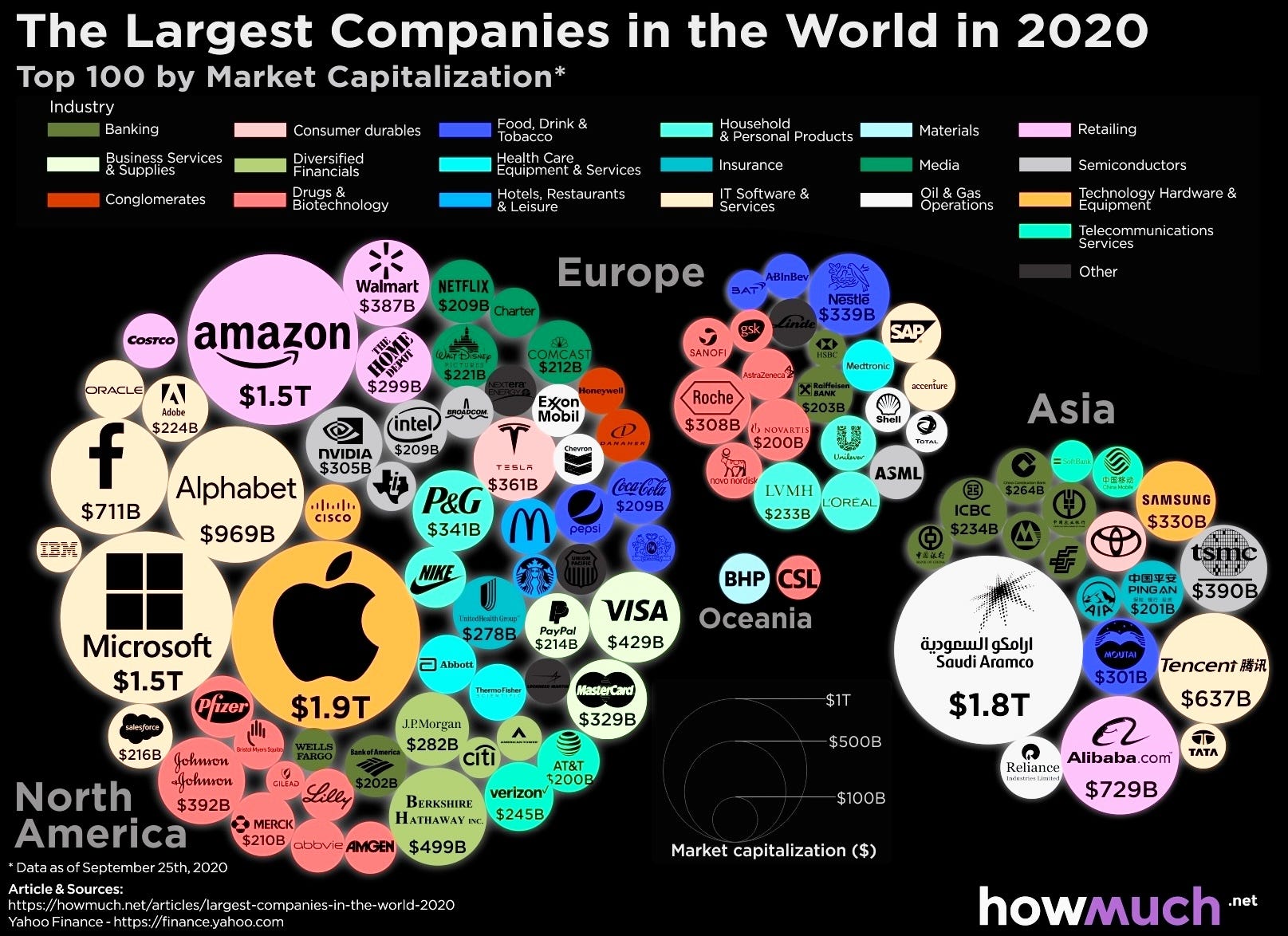
Will AI kill brands? or make them stronger?
There’s a growing narrative that AI, OTAs, and marketplaces will commoditize everything. In that theory brands will not matter because users can simply “search through to the product” and pick the best option. In theory, that sounds true. In practice, it quickly breaks down.
Try searching for a simple vitamin on Amazon.
You’ll find dozens, sometimes hundreds, of nearly identical products. Prices range wildly. Some have 30,000 reviews (are those mostly fake?), others have 300 (is it unreliable?). The photos look polished, but is that just AI or a great designer? Basically that commodity idea is just a sea of unfiltered (or sponsored) choice.
When the stakes are low, maybe you take a risk. But when you’re putting something into your body, or booking a $2500 hotel stay, you want to trust. Not data. Not AI summaries. Trust.
And trust, today, is still built through brands.
There’s an assumption that AI will solve this by aggregating and summarizing information better than humans. I’m not convinced. If platforms like Google, Amazon, Booking, or Tripadvisor haven’t solved fake reviews at scale, it’s unlikely a generic LLM will magically figure it out. In fact AI systems, trained on aggregated opinions, could be even easier to manipulate. Flood the system with enough “good” signals, and the AI will confidently recommend the wrong product.
Currently LLMs optimize for what is most said (it becomes the most probable suggestion), not necessarily what is most true.
So where does that leave us?
Back with brands.
Take Apple. When they release the Macbook Neo, people don’t see it as “cheap.” They see it as “accessible premium.” The same product from an unknown manufacturer, even with identical specs (OK the they wont have MacOS), they would struggle to get attention. Not because of the product, but because of the lack of trust.
And a hotel stay frequently costs a lot more than a Macbook.
As AI compresses discovery into fewer options, the choice will be more opaque. Fewer touchpoints. Less differentiation. More reliance on invisible ranking systems. In that world, brands become shortcuts for decision-making. And if we look back at internet history, that is exactly how Google search evolved too. After letting everything roll up to the top of search pages, after a while authority became a key point. And isn’t authority another concept for a brand?
Ironically, the more the internet promises to democratize everything, the more we need brands to navigate it.
As I wrote in my First principles of marketing article. The moment you have more than one of something, you need marketing. And if you do marketing consistently enough, you end up with a brand.
I don’t think AI will be the exception, I think it will probably reinforce it.
• A tool to write a better investor pitch - Link
• The inspiration Benchmark for hospitality - Link⁺
• Using Nano Banana for Architecture - Link
• Soap Operas in the Tiktok age - Link
• Nothing goes viral by accident - Link
Did you know: The word "brand" comes from the Old English "brand," which meant "burning" or "a mark made by burning." Historically, people marked livestock with fire-heated tools to show ownership. Over time, the meaning changed from a physical mark to representing the identity or image of a product or company. Defined using Lomar Dictionary⁺
AI won’t kill brands, it will expose brands people don’t trust. When choices shrink, people don’t compare more, they go with what they recognize and trust.
AI makes how choices are made less visible, not more, which means trust matters more, not less. In hotels, you’re booking a stay you haven’t experienced yet, and if the brand doesn’t build trust before booking, AI won’t fix it.