


Hello,
Probably I should call this edition the human edition. It’s funny how so many viewpoints are either/or. Between AI, automation and people, it isn’t that. And we’ve been at this debate for over a century. Also did you know that a century ago, American’s saw tipping as a European thing that was pointless? See my column.
Best, Martin

                                Klairhaus, the perfect employee and customer gifts.
                                     Quality, crafted, every day items for the office.
                                                               Find out more ➛

Louis Vuitton’s Narrative Hospitality
The LV Hotel in Bangkok is a masterclass in using “hospitality” as a device to tell a luxury brand’s story. They transformed a heritage building into an immersive showroom and shopping experience. It is brilliant and I really think there are opportunities here for boutique brands to partner with the retail brands and do pop-up work.
EXPERIENTIAL RETAIL STRATEGY
About me: I'm a fractional CMO for large travel technology companies helping turn them into industry leaders. I'm also the co-founder of 10minutes.news a hotel news media that is unsensational, factual and keeps hoteliers updated on the industry. AI vs. The OTA Monopoly (repeat?)
With Booking’s stock market dip the debate is back on. I’m always surprised how quick people are to jump to deep conclusions and analysis based on a momentary stock dip. I wrote my brief analysis and linked to some further analysis in my post some weeks ago before the stock took a hit.
AI TRAVEL DISRUPTION + AI PLATFORM AND CAKES
The Human Element in High-End Travel
In the world of six-figure travel, human relationships remain the ultimate luxury that automation cannot touch. This is a brilliant interview with SmartFlyer giving a behind the scenes look of humans in travel. I did try to make a daily itinerary for a visit to a museum recently. Despite uploading their agenda of the day, AI’s itinerary was a mess, we arrived and things were closed, or it suggested workshops that didn’t exist etc. so yeah - humans still exist. But I really want low-cost service like a travel assistant who can do these things.
LUXURY TRAVEL ADVISORY + TRAVEL ASSISTANTS REVIVAL? + HUMAN ELEMENT ECONOMICS
Subscription Models for Airlines
Interesting inspiration from the retail industry from airlines and Zara for inspiration on how to build predictability and loyalty through subscriptions. By offering privileged access and flat-rate convenience, they can move away from the race-to-the-bottom on price. This shift from transactional sales to recurring relationships could be inspiring. But you don’t need to move yourself to another city to shop in Zara. Also loyalty is such an over-used word in business.
AIRLINE LOYALTY MODELS
Nomad’s Boutique Strategy Under Hilton
Andrew Zobler is attempting the most difficult balancing act: scaling a brand globally while keeping its boutique soul intact. By leveraging Hilton’s distribution network but retaining control over design and branding. It’s a test of whether a major hotel giant can successfully nurture a “cool” brand without diluting what made it special. If they pull it off, it creates a new blueprint for boutique brand acquisitions. I hope they succeed.
BOUTIQUE HOTEL SCALING
Breakfast as a Strategy
Luxury hotels are moving breakfast from a buffet afterthought to a key driver of the guest experience and brand narrative. It’s often the last touchpoint a guest has before checkout. When I was a hotelier we tried to value it more, but it was never great. It is a brilliant opportunity and could be a great profit driver.
HOSPITALITY GUEST EXPERIENCE
The Danger of Founder-Centric Branding
Many brands fall into the trap of over-glorifying the founder’s vision at the expense of the customer’s needs. While a great story is inspiring, it only works if there is something in it for the customer. The brand narrative needs to be a bridge to the customer, not just an owner story. Your story is only as good as the problem it solves for someone else. Staying at a hotel that is all about some rich person who wanted to show their interior design skills doesn’t really make you want to come back. Staying at a hotel that is all about a rich person wanting to solve the needs of a frequent traveller based on their own experience, is more likely to.
CUSTOMER CENTRIC BRANDING
The Rise of Outdoor Hospitality
An interesting market growth. Camping have been big in France for many decades, is there something to learn from that market or is this totally new? The glamping market seeing double-digit growth, major players like Marriott are taking space in the niche. This is one area where Airbnb could have a big advantage.
OUTDOOR TRAVEL TRENDS
Nope, the Software Industry Isn’t Dying
As I wrote two weeks ago here it is from someone who has actual experience: The “who” and “how” of coding are changing, the appetite for complex, specialized solutions is only growing. We are in a messy, uneven transition period that rewards those with deep domain expertise. It turns out that even when AI writes the code, someone still needs to know what problem they are trying to solve.
FUTURE OF SOFTWARE
Airbnb’s AI-Fueled Growth
Brian Chesky sayd their recent revenue surge is less about luck and more about a calculated rebuild of their core tech platform. Embedding AI into every operation without the massive overhead of building their own data centers. “Small-team innovation” he calls it. Interesting. Also I really wonder if the video isn’t AI generated, but maybe I’m just seeing things.
AIRBNB TECH STRATEGY
Opinion
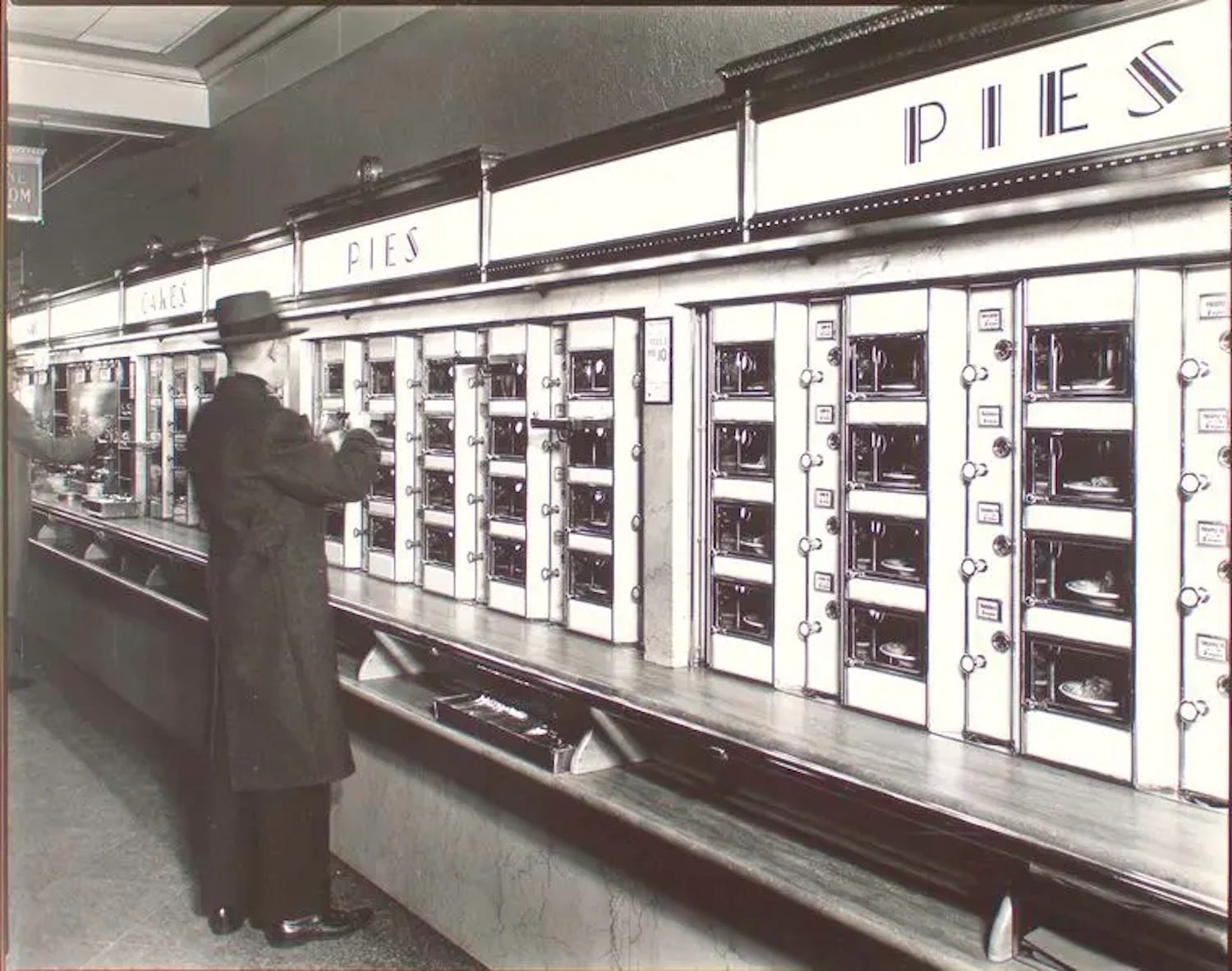
Full self-service isn’t working, Amazon’s proving that
Amazon has quietly started closing more of its Amazon Go physical stores. The idea was revolutionary: just walk in, grab what you need, and walk out—no checkout lines, no friction, all powered by sensors and AI. Per many studies, if you remove friction you increase consumption. But this didn’t work out.
I visited one a while back. The tech was great. But the place felt like I was shopping from inside a vending machine. No buzz, no people, no accidental “excuse me” as you reach for the same item as someone else, I don’t know why - but it was just an eerily cold experience. It really did feel like shopping in a vending machine.
Amazon set out to eliminate the worst part of the store: waiting in line to pay (it really is the worst part). But in doing so, they also removed the best part: people. We don’t enjoy lines but we understand that we need to pay. And every now and then, in that line, someone smiles. Someone makes a comment about the weather. Someone helps you bag your groceries. Small things, but they stick.
Do we need lines for that? No, no please do not conclude that from this article. But someone smiling, someone commenting on the weather, someone helping us bag the groceries. That actually makes it part of life, the part that’s hardest to scale: human connection.
Many hoteliers get this. But they’re going to the other extreme. Trying to keep all the bathwater, forever. There’s a middle ground where speed and efficiency is critical backed by just the right amount of human connection. ID-checks, Payments and transactions are not the right place to try to build human connection.
A century ago in New York Automats were a solution to have fewer waiters because they were seen as a necessary evil (did you know that at the time American’s considered tipping to be a European thing and wanted to do away with it?). In the end humans survived and Automats less so.
AI and automation layers can take care of the boring, repetitive stuff: stock checks, payment processing, receipt emailing. But let’s reserve the front-of-house for the human connection.
We’ve spent a century trying to replace humans with machines, (and I tend to agree some humans are really annoying). But I think we need to analyse the work that has no real value, in fact in many cases it has negative emotional value, and automate those.
Today many front desk experiences are similar to Customs & Border Control. Reality is with the tech available now we don’t even need the front desk in it’s current form. This could just be people taking your luggage and showing you to your room while checking you in on the fly.
There are so many opportunities. Removing people shouldn’t be one of them. Removing the negative value tasks of people should come first.
• Winter Olympics are better than the Summer Games - Link
• The inspiration guide for hospitality - Link⁺
• Automating Academic Illustrations for AI Scientists - Link
• Google’s view on Digital ads for 2026 - Link
• Gildo Zegna on the true price of luxury - Link
Did you know?: The word "tipping" comes from the verb "tip," which is believed to have originated in the 1700s from the English underworld slang "tip," meaning "to give, to pass." The noun sense for extra money may come from the phrase "To Insure Promptness," sometimes written on jars in inns or coffeehouses. Defined using Lomar Dictionary⁺