


Hello,
Taste, opinions, judgement - these qualities still belong to humans. The great news is that the hospitality needs more of this not less. Maybe AI could have come up with Jony Ive’s new Ferrari interior design, but it wouldn’t know if it had. Let’s train people on taste, opinions and judgement (productively).
Best, Martin

                                Klairhaus, the perfect employee and customer gifts.
                                     Quality, crafted, every day items for the office.
                                                               Find out more ➛

RM vs. Loyalty
There’s a conflict of interest between RM and Loyalty. Loyalty wants to give as much as possible to make them come back. RM wants to charge as much as possible to increase revenue. Apparently there’s a way to make them work together. Going to be an interesting tug of war.
REVENUE AND LOYALTY ALIGNMENT + MYTH OF HOTEL LOYALTY
About me: I'm a fractional CMO for large travel technology companies helping turn them into industry leaders. I'm also the co-founder of 10minutes.news a hotel news media that is unsensational, factual and keeps hoteliers updated on the industry. Room Categories and complexity
I remember being a huge proponent for simplifying room categories. Early hotel marketing projects I worked on, one vendor of CRS was super proud that they had managed to build over 600 room packages. We thought it was insanity. But we had a limited view, we can argue that revenue managers might have complex projects, but they certainly aren’t dumb. So maybe those room types do serve a purpose.
ROOM CATEGORY SIMPLIFICATION
Machines vs. Artistry
As AI automates routine tasks, human skills like taste, judgment, and influence are becoming our most vital assets. AI can process data, but it struggles with the nuances of human intuition. The future will belong to generalists who can solve problems and specialists who understand the deep nuances of their industry. So essentially hotel GMs and many of the front-office work is safe.
HUMAN INTUITION ADVANTAGE + FOCUS ON WHAT NOT TO AUTOMATE
Future-Proofing Global Brands
The challenge with any hotel brand is maintaining consistency while delivering value. Jean-Yves Minet believes that mastering purpose, value proposition, and personality is the only way to build future-proof brands. It is true. But I think there’s fundamental element - money. Because hotels need to be upgraded every 5 years max. The biggest failure in hotel brands (IMO) is that without constant reinvestment - consistency is lost.
BRAND CONSISTENCY STRATEGY
Ferrari Luce, yes I have an opinion too
Jony Ive’s design for Ferrari’s first electric vehicle, caused a massive uproar in the quasi-design community. People hate it, people love it etc etc. I believe that judging a physical design based on an image is impossible so I have no opinion on the actual design. I can say that the current Ferrari infotainment system is embarrassingly bad. My main opinion here is that, the presentation is insane. I can learn from this. It seems as if as much effort was put into the presentation of the design than the design itself. Seems like a waste, but look at the impact.
PHYSICAL DESIGN COHESION
The DMO of the Future
In a fascinating experiment, AI agents were asked to design the future of destination management, resulting in a platform that prioritizes community impact over tourism volume. I mentioned this in my over-tourism rant some months ago. We should be using AI to improve distribution, not stop tourism and this is a great example of doing that. Some things we need to watch out for however are that AI takes their data from published data so it will be as biased as the loudest voice.
AI DESTINATION MANAGEMENT
AI as a Tectonic Shift for Productivity
There are a lot of random thoughts (including mine) on how AI will change productivity in hospitality. Some teams have started actually building apps for it. Embedding intelligence into daily decisions regarding cost management, staffing, and maintenance. Bringin more stable operations and fewer surprises for leadership, regardless of how sophisticated the tool itself is.
HOTEL AI PRODUCTIVITY + SUMMARY⁺
The Legacy Preservation Layer in Travel
The travel industry (and probably many others) have a legacy layer that has no interest in evolution and which arguably slows down innovation. I don’t disagree, I’ve known startups who went bust because they couldn’t get access to legacy APIs. But that the layer needs to be removed is like shouting at a symptom to try and fix the cause. The key here is build better, cheaper, faster. Customers will change if the benefits are good enough, not if they are tiny increments.
TRAVEL DISTRIBUTION INERTIA
Claude Opus 4.6 and the AI Analyst
Anthropic’s latest release, Claude Opus 4.6, marks a shift from AI as a simple assistant to AI as an operator in finance. By automating high-stakes knowledge work end-to-end, it effectively functions as a junior analyst. It will probably not be as fast and as predictable as a dedicated Revenue Management system or other hotel BI tool. But it is interesting.
AI FINANCIAL AUTOMATION
Ads Inside ChatGPT
OpenAI has officially introduced sponsored results at the bottom of ChatGPT responses. These ads are currently restricted to a small group in the US and do not influence the actual answers provided by the AI. This could be an interesting opportunity for hotels, let’s see. There are discussions if this will influence the responses. I don’t know of any platforms where ads have not impacted the quality of the responses. Amazon, Google, Facebook, Youtube, Media - somehow paid has influenced the results over time.
AI ADVERTISING MODELS
Opinion
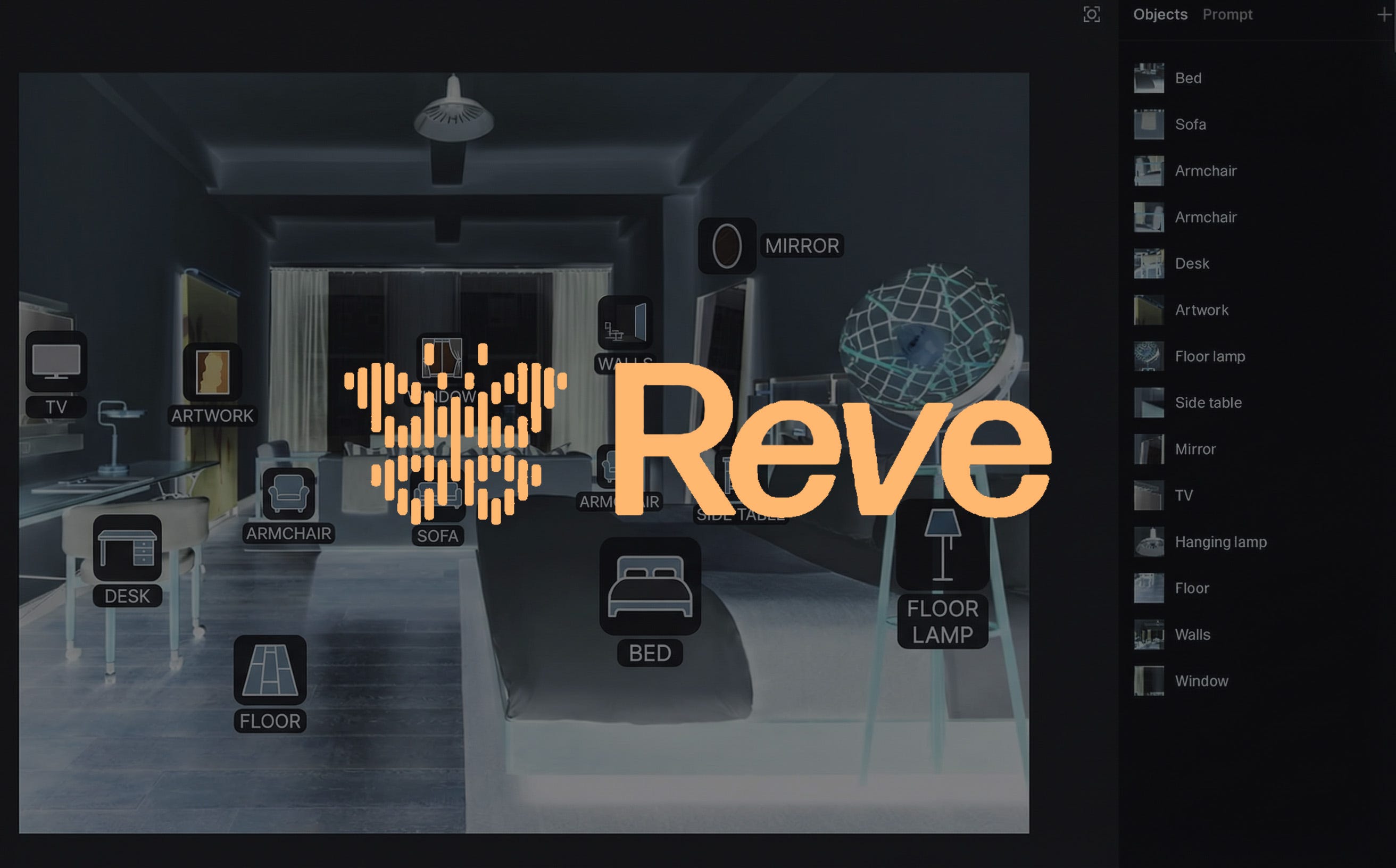
Next level AI image editing
I’ve written before about using AI to tweak hotel images. Add snow to the courtyard. Make it sunny. Throw in some Valentine’s decorations. Useful for campaigns. Helpful for social. Maybe gimmicky, but really practical.
But something has shifted.
I just tested a new feature with reve.com where I uploaded a hotel room image. The AI didn’t just “decorate” it. It analyzed the scene, identified the bed, the chair, the lamp, the windows, the walls, and then allowed me to select individual elements and move them around.
Move the chair. Shift the table. Adjust the layout. See the video below. This was my first try, I’m sure there are many better ways to do this.
When I asked it to move a chair, it turned into a bench. Not perfect. But the perspective was right. The lighting was coherent. The scale made sense. The room still looked real.
That’s not just image editing. That’s spatial reasoning.
And that adds a lot of possibilities for hotels and speed to market. (Example the test room photos can now be scaled to all the room types for the pre-opening website).
Architects can now test layout variations in minutes instead of days. Interior designers can experiment with furniture placements without 3D modeling. Owners can reimagine a lobby before committing to expensive refurbishments. Marketing teams can prototype new room configurations visually spending on FF&E.
What excites me most is not just the marketing angle, though that’s obvious. It’s the operational and design implication. Meeting space layouts, family room layouts, office setup in a room. We can have more options that can be sold as attributes and visualize them.
As I wrote last week the things with AI is to start projects, build stuff. Try things out. I used Reve last year. It was cool, then something better came along. So I dropped it. Now they’ve launched this option, it’s back. In other words things move fast, fixed ideas are the biggest enemy of staying on top of things.
So if something is not great today, try it again in a few weeks it might be amazing.
• The Return of Apprenticeships - Link
• The inspiration guide for hospitality - Link⁺
• We’re too obsessed with distinctiveness - Link
• Prince’s legendary half-time show - Link
• Confessions of a London fake news TikToker - Link
Did you know?: The word "skunkworks" comes from "Skunk Works," the nickname for the Lockheed Martin Advanced Development Projects division created in the 1940s. The term was inspired by a comic strip called Li'l Abner, which had a "Skonk Works" factory. The spelling changed to "skunkworks," and over time, it began to mean any group doing secret, innovative work inside a larger company. Defined using Lomar Dictionary⁺
This is hospitality.
We do not sell interfaces. We sell experiences people can describe.
On the AI image editing piece, spatial reasoning is the shift. Moving furniture in a photo is not just marketing. It shortens decision cycles. Pre-opening teams can test layouts. Owners can pressure-test a refurb. GMs can experiment with a family-room setup before buying FF&E. That is speed.
Just because we can move the chair does not mean we understand how the room feels when someone walks in. That is taste.
Same tension with RM and Loyalty. Same with brand consistency. Same with Ferrari. Tools can optimize. They can scale. They cannot tell you whether something feels right for your guest or your promise.
Hospitality does not need less AI. It needs better judgment about where to apply it.
Things move fast. Fixed ideas fall behind. Stay curious. Do not get swept away.