


Hello,
OK so everyone is on about Clawd Bot. It is changing everything. But what does that really mean for hotel industry. Where we’re not office working and we have actual sheets to change and people to welcome. See my column below. PS: See you at ITB?
Best, Martin

                                Klairhaus, the perfect employee and customer gifts.
                                     Quality, crafted, every day items for the office.
                                                               Find out more ➛

Whatnot: Live Commerce
It seems live commerce is finally starting to work in the west. Whatnot has quietly generated $8 billion in sales and dominates over 50% of the US market. Its rapid growth in fashion and beauty suggests the category is finally picking up. I wonder how hotels and travel can get into this. Community-driven, real-time shopping is becoming a thing.
LIVE COMMERCE GROWTH + MORE LIVE SHOPPING BOOM
About me: I'm a fractional CMO for large travel technology companies helping turn them into industry leaders. I'm also the co-founder of 10minutes.news a hotel news media that is unsensational, factual and keeps hoteliers updated on the industry. Boutique Brands
Hotel brands are typically a vehicle that can be sold to big hotel chains which become a way to grow franchises for the chains. But maybe there’s another model. Ian Schrager and Highgate are redefining the “boutique” model to scale without losing their souls. Founders focus on design and brand identity while using the operational talent of a larger partner. It’s interesting, but it does beg the question: what is the exit plan? For now, let’s focus on the growth of great brands.
BOUTIQUE BRAND IDENTITY
The YouTube Opportunity
A gap is opening for high-quality, mid-tier content on Youtube pushing traditional Hollywood talent toward to where viewership is booming. The creator economy is essentially becoming the new “middle class” of entertainment. Which is also a great opportunity for smart product placement marketing that is more subtle. Giving boutique brands a way to reach their audience.
CREATOR ECONOMY SHIFT
Google Maps as a market maker
A bit over a decade ago when business listings appeared on Google Maps, most SEO and marketing agencies were “hacking” them to drive tons of qualified traffic to their hotels. Some OTAs were literally hacking hotel’s listings to put their site as the website. Since then things have improved. But Google Maps is still a market maker in the restaurant business. A long but interesting analysis.
ALGORITHMIC MARKET IMPACT
PMS Transitions as a Leadership Test
Prominent hotel consultant Simone Puorto apparently said as a hotelier he would rather go through a divorce than a PMS change. I did a PMS change as a GM - it was painful (not as bad as Simone says). I wasn’t prepared for the backlash and staff frustration. Ultimately, a shiny new tool won’t fix the change management no matter how good it is. I wished someone (the PMS vendor) had prepared me for what was to come.
PMS CHANGE MANAGEMENT⁺
2026 The AI-First Shift
According to Amadeus trend for 2026, hotel discovery and “configurable stays” will be managed through AI (see my last week’s column as well). For hotels success will depend on having structured, machine-readable content, as AI discovery will favor data organization. I wonder if hotels could just create an XML file on their site with all the structured data that AIs want and see how that goes.
AI TRAVEL TRENDS
Emotion over Perfection
The small, non mandatory gestures matter more than rigid perfection. In an age of automated everything, a human-centered, slightly “imperfect” touch is becoming the ultimate premium.
EMOTIONAL LUXURY⁺
People-less Retail Pivot
Amazon is closing 72 Amazon Go and Fresh locations. They plan to keep the “Just Walk Out” technology alive in other formats. I tried those stores. Really cool. But it feels like walking through a vending machine. No attachment. Might as well order online. Maybe something for hotels to analyse.
AMAZON RETAIL SHIFT
The Randomness of AI Recommendations
New research shows that AIs like ChatGPT and Claude are highly inconsistent when recommending brands, often producing varied lists for the same prompt. While some brands appear more frequently, the correlation between “visibility” and a brand’s presence in the database is weak. Something to consider with all generative AI. See my column.
AI BRAND VISIBILITY + AI SEARCH OPTIMIZATION
Opinion
The AI Dilemma: Should Hotels Wait or Build?
AI is moving so fast it’s really really hard to keep up. One week it’s all about chatbots. The next, it’s local AI agents like OpenClaw executing full workflows on a local device. It’s amazing. But it’s also messy.
This puts hotels in a difficult spot.
Right now, most AI is still probabilistic. That means it gives you a result that is likely to be right, not guaranteed. In marketing, that’s fine. If a chatbot suggests five possible taglines, it’s doing its job. But a PMS can’t guess what rooms are available. An RMS can’t offer a different price every time you refresh the page, depending on which way the wind is blowing. And no one wants their restaurant menu to be reinterpreted every 10 minutes. (Such systems need to be deterministic meaning logical systems that produce identical outputs when given the same inputs.)
At the same time, waiting for the tech to stabilize feels like what hotel industry has done for decades and rarely the best thing.
After the dotcom bust, hotels waited to see if the internet would become a thing. By the time it was obvious, Expedia had already captured much of the distribution stack. We waited on mobile, too. And today most mobile bookings are made through OTAs. When hotels hesitate, others (mostly OTAs) move and pick the low hanging fruit.
Now AI is knocking. And again, the instinct is to wait. Let it mature. Let it become safe. Let someone else figure it out. But here’s the problem: AI will not slow down. And by the time it feels “safe,” others will have already eaten your lunch.
Still, charging into this headfirst with big budgets isn’t the answer either. The landscape is too volatile. Standards don’t exist. There’s a lot of “bricolage” (french for hacking and tinkering things together). One solution that works today might be completely irrelevant in six months. Worse, it might break critical workflows if implemented poorly.
So what’s the right move?
There is an idea floating around that maybe, someday, every company (and even individual) will make their own software using AI and that SaaS is dead. It would mean no more off-the-shelf PMS and so forth.
But we are nowhere near that future. I agree it is a possibility and the recent Clawdbot/Openclaw buzz gave us a glimpse of what that could mean. But this is proof-of-concept level. There is still a very long way to go.
Here’s what I think is the right move.
You don’t need to bet the farm. You need a sandbox. A small, focused, skunkworks effort (possibly with a freelancer or AI engineer) working off clean, anonymized hotel data to test ideas. Could you build a better UI on top of your PMS that lets staff request actions to get done and the system executes over multiple clicks and functions? Could you automate parts of group booking administration? Could you prototype whatsapp, email, replies to guests within seconds and adapt it to your style and needs.
Most of it will break. Some of it will be pointless. A few things might be brilliant (see the article below on accidental discovery).
But more importantly, your team will begin to get familiar with what can be done. You’ll learn how to think with AI, not just talk about it. You’ll stop waiting for perfect products and start shaping what you need.
And when the giants do arrive with polished tools and scalable models, the hotels that already have internal experience will be the ones best positioned to integrate, adapt, and move quickly.
Waiting is the easy option. But it rarely works out well in tech, as history has shown. If you’re going to get ahead in this next shift, it won’t come from buying the right product, it’ll come from learning how to build with what’s already here.
Start a skunkworks. That’s your edge.
• The Power of Accidental Scientific Discovery - Link
• The Death of the Mass Market Paperback - Link
• Stan Smith: Some people think I’m a shoe - Link
• Instagram Reels Move to the Big Screen - Link
• The OTAs of the World Infographic Remixed - Link⁺
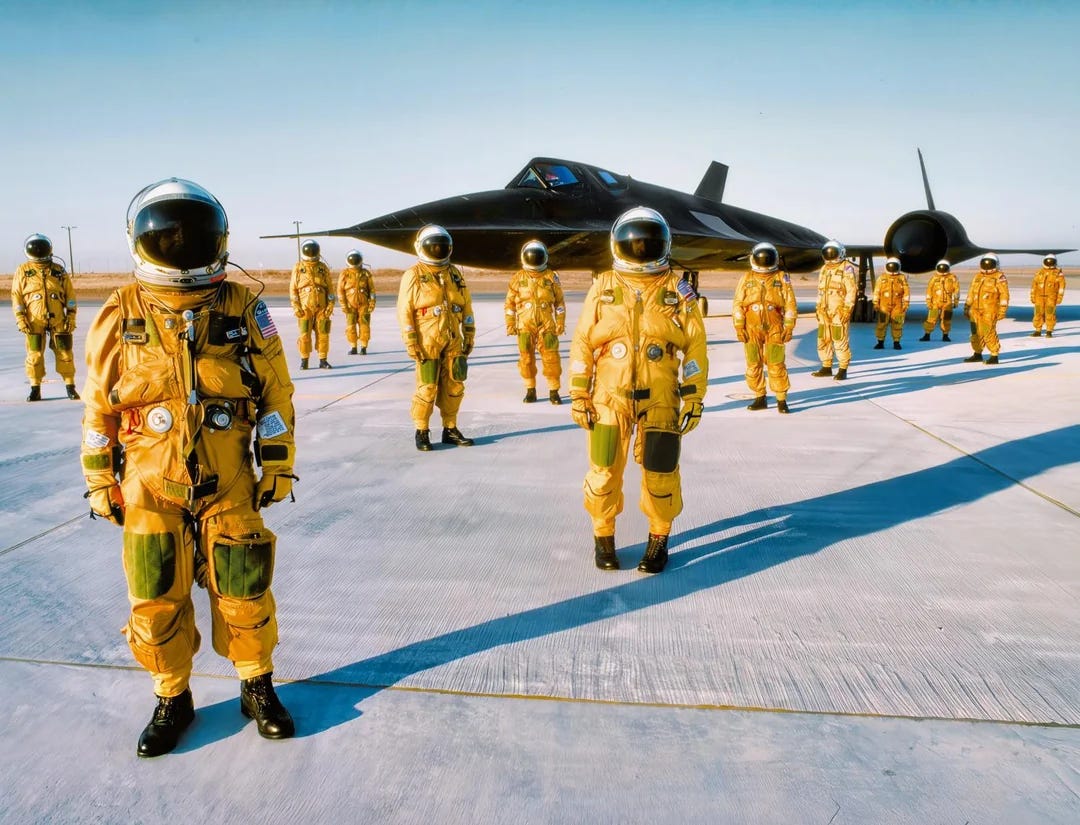
Did you know?: The word "skunkworks" comes from "Skunk Works," the nickname for the Lockheed Martin Advanced Development Projects division created in the 1940s. The term was inspired by a comic strip called Li'l Abner, which had a "Skonk Works" factory. The spelling changed to "skunkworks," and over time, it began to mean any group doing secret, innovative work inside a larger company. Defined using Lomar Dictionary⁺
The PMS divorce line made me laugh because it’s funny and painfully accurate. What hit home is the tension you name between probabilistic AI and deterministic hotel operations. That gap is where a lot of the anxiety lives. I love the skunkworks framing because it sidesteps the whole “wait vs rip-and-replace” trap. Not betting the farm, but also not sitting on your hands. Learning how to think with AI before the polished tools arrive feels like the real advantage. Curious to see how many hotels actually permit themselves to experiment this way.