


Hello,
The holidays are getting real, and trends reports are coming fast! There’s a brilliant folder with all the trends reports that I share below. So many predicitions, but usually they don’t happen over a year. Often they do end up happening though. Have a great read.
Note: New Global OTA chart is coming soon.
Best, Martin

                                Klairhaus, the perfect employee and customer gifts.
                                     Quality, crafted, every day items for the office.
                                                               Find out more ➛

There is not an OTA duopoly
Last week I got a sneak peak at the OTAs of the world research of 10 Minutes⁺. And was surprised to see that actually there is no duopoly between Expedia and Booking. There is just Booking. And far, far behind is Expedia. I posted it on Linkedin and the discussion was interesting. It was pointed out that the duopoly does exist, in the US. Comments are more interesting than my post, pitch in.
WHAT DUOPOLY?
MCP: A Direct Bridge to AI Assistants
MCP frameworks promise to connect hotels directly to AI assistants with real-time data for availability, FAQs, bookings, and repeat-guest servicing. For independents, this could be a genuine leveling force. The idea is simple: give AI assistants the same accuracy and speed as a hotel’s own CRS. But it seems there are a lot of variants of MCPs, just like having an API doesn’t mean the right data is available.
AI BOOKING FUTURE
Langham Launches AI Toolkit
Langham Group introduced three AI agents to support guests and staff: Experience, Knowledge, and Insight. They offer multilingual service, training support, and commercial recommendations. It’s a polished example of AI used as augmentation. Luxury brands adopting tools like this could level up their teams. Chatbots are the first to get LLMs and AI.
AI TOOLKIT LAUNCH
What is an LLM
Large language models are often not understood, they’re not magical systems with answers to everything. They rely on a simple next word prediction objective, yet scaling that with massive datasets produces surprising abilities that we cannot yet fully interpret. The architecture is public, so differentiation comes from training scale, fine-tuning, and integration. Understanding the foundations helps anyone working with AI make more informed decisions about strategy, safety, and deployment. A great post which is a summary of a great interview. How meta.
AI PRIMER
About me: I'm a fractional CMO for large travel technology companies helping turn them into industry leaders. I'm also the co-founder of 10minutes.news a hotel news media that is unsensational, factual and keeps hoteliers updated on the industry. 2026 Trends and hotel trends
The trend reports are coming (they’re also here). With 10Min team we extracted the main hotel, travel and marketing related ones and worked with some AI to summarize them to see what are the key trends. Next year’s strongest trends blend AI efficiencies with deeply human experiences. Attribute-Based Selling, intentional travel (“Whycation”), skill-seeking journeys, and functional food are gaining traction.
2026 HOTEL TRENDS
Will AI Take Your Job?
Salespeople feel relatively safe because relationships and trust are hard to automate, while revenue managers and marketers see AI as an amplifier for strategy, content, and number-crunching rather than a replacement. The uncomfortable truth is that AI probably will reshape roles. Also so much of current work is like the Calculators of the 1950s.
AI & JOBS
The Geography of Welcome
Bashar Wali’s column explores a simple question: why do some places feel instantly welcoming while others feel transactional? His conclusion is that real hospitality lives in culture, design, and instinct, not in booking engines or brand manuals. Algorithms can help people find hotels, but they can’t teach a team how to make a stranger feel like they belong. It’s a useful reminder that “sense of place” is built one human interaction at a time. I would add that the most basic point is recognition, see more in my column.
GEOGRAPHY OF WELCOME
When Google Overrules Its Own AI
Google’s Gemini 3 accurately identified the ideal Las Vegas resort for a specific family-style query, only for Google to override it and push users into paid Hotel Ads instead. It’s a small story with big implications: even as AI gets better at relevance, ad-driven platforms may still nudge travelers toward revenue over fit. As I mentioned last week, once there are ads, there will be biases.
AGENTIC DISTRIBUTION
Five Trends Reshaping Hospitality
EHL view on 5 main trends in hospitality: autonomous AI, sustainable food systems, human-centric leadership, immersive experiences, and regenerative hospitality. With the market projected to grow steadily through 2026. It’s notable how many of these themes sit outside the guestroom. And building the road to that future is quite different for every hotel. The tech side particularly.
FIVE HOSPITALITY TRENDS
Mostly we have no clue what to automate
I spent some time reading the H2C report on AI and Automation. It is a brilliant in-depth analysis of AI and automation in the hotel industry. The main use plan most hoteliers have for automation is… chatbots. I think that’s because we’re influenced by ChatGPT’s user interface. It is hard to know what one wants if one can’t see it. There are in fact hundreds of things computers can automate, which aren’t chatbots.
AUTOMATE SMALL⁺ + H2C STUDY + WHY AI PJTS FAIL
America’s Sensationalism Goes Global
A new analysis shows much of the sensational content related to US politics is actually produced overseas by monetization-driven accounts. The problem is that when we reward clicks we get more clickbait. This is what affects every form of attention driven media today (pretty much any _____ media). Interesting to see how much. 10Min is an experiment in de-sensationalizing.
MISINFORMATION ECONOMY
Opinion
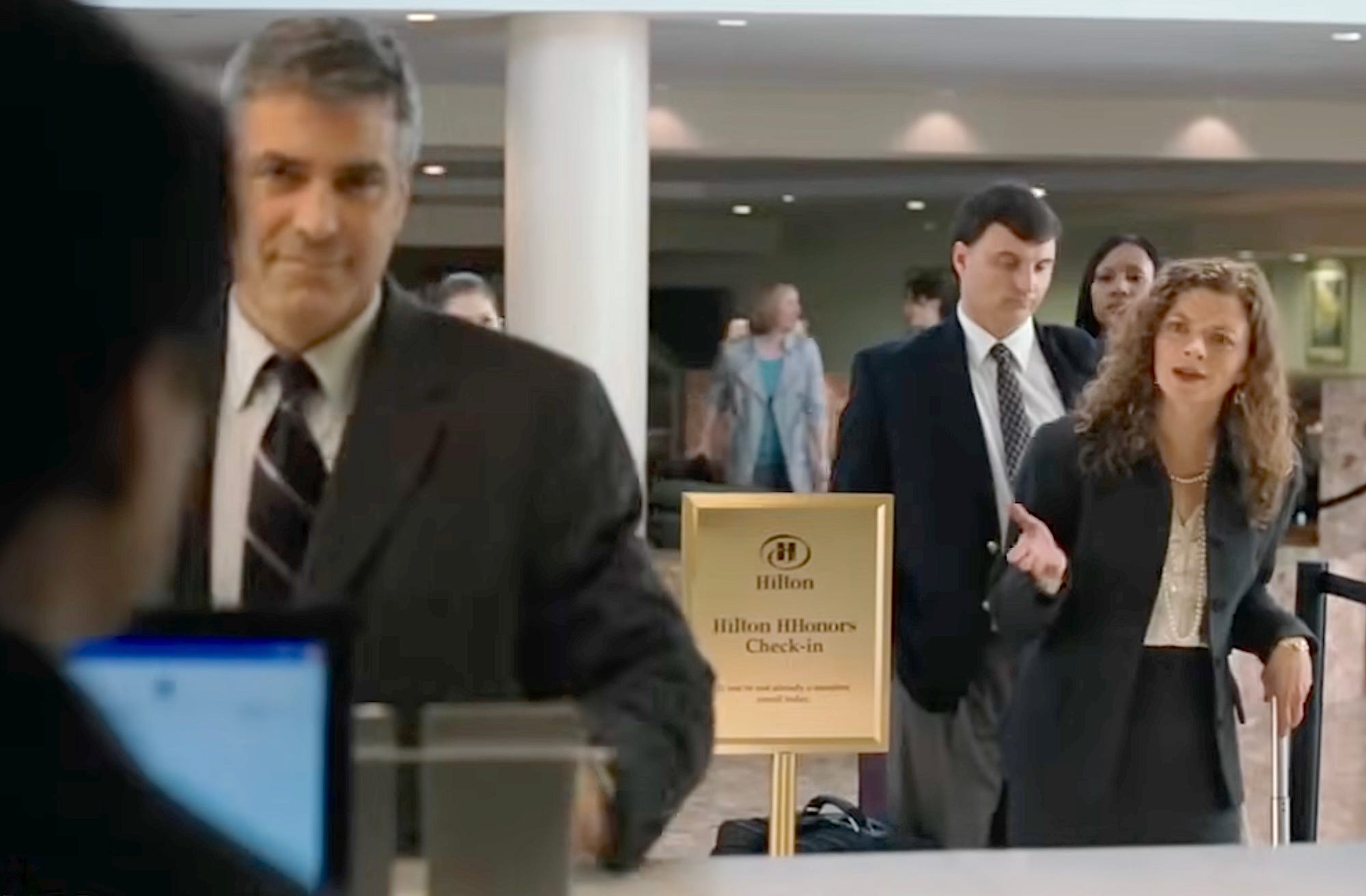
Tech won’t replace Service, But it can help us Recognize
Ask a hundred hoteliers what makes for great service, and you’ll hear all kinds of answers: personalization, warmth, staff, speed, amenities, technology, you name it. But if we had to reduce it to just one word, I’d argue it’s this: recognition.
Recognition is more than remembering a name. It’s about seeing the person in front of you, understanding them and letting them know that you did. In hotels it’s about acknowledging their relationship to your hotel.
In its most basic form in hospitality, recognition is knowing if someone’s been here before and acting accordingly. Think about the difference between for a first time guest, “Is this your first time here?” and “Welcome, let me show you around.” One is transactional. The other is personal. One reminds guests they’re anonymous. The other says, “We see you.”
This extends beyond hospitality. I recently read about someone who left Verizon after 19 years to switch to AT&T. When he asked Verizon to match a competing offer, they didn’t even acknowledge his loyalty, no small gesture, nothing (well they did put hoops in his way to make it hard for him to leave). That lack of recognition didn’t just cost them a customer; it left a bitter aftertaste and he’s busy telling the world about it. I don’t think he needed a big discount-he just wanted to be seen and acknowledged.
Hotels do this too. I once stayed at a hotel weekly for several months. Same front desk clerk. Same check-in routine. And every single time, I was asked to fill out the same forms, present the same passport, get the same polite-but-clueless smile. After two months, I was still a stranger. I stopped booking.
Now compare that to a property where the bartender remembers your drink, or the front desk greets you with “Welcome back.” It’s not magic, it’s recognition. And it builds loyalty faster than points ever will.
This is also where technology can truly help. I remember working with a hotel group that has a lot of self-service kiosks and a roving attendant to help guests in case of need. Seems horrible to hotel buffs, but it worked great. However there was no system to recognize the guest. I had suggested making the background color of the screen a a different color for all first time guests. So the attendant could see from far that they might need help. And the regulars aren’t being annoyed with “do you need any help?”.
Something as simple as a different screen color for first-time users on a kiosk could guide staff in the right direction. Great guest profiles should be part of the core systems, not a bolt-on. With AI, tech can start find possible duplicates, with LLMs it can suggest a greeting. There are dozens of quick wins.
Recognition isn’t a “nice to have.” It’s the start of every great service moment. It costs nothing, and pays back in loyalty, satisfaction, and word-of-mouth. And yet, it’s the thing most often overlooked, the “have you stayed with us before?” neutral statement should be retired - they should know.
Want better reviews? better rates? more word of mouth? Start by recognizing who’s in front of you.
• The Microdrama Gold Rush - Link
• Creativity as a Business Moat - Link
• Emotion Is the True Luxury - Link
• Brand Waves: Holiday Storytelling - Link
• The Global Hotel Supply in 2025 - Link⁺
Did you know?: “Creative” comes from the Latin word “creare,” meaning “to make, produce, or create.” The word entered English from the Medieval Latin “creativus,” meaning “producing,” in the 17th century. It was first used to describe people who could bring about something new or original. Defined using Lomar Dictionary⁺